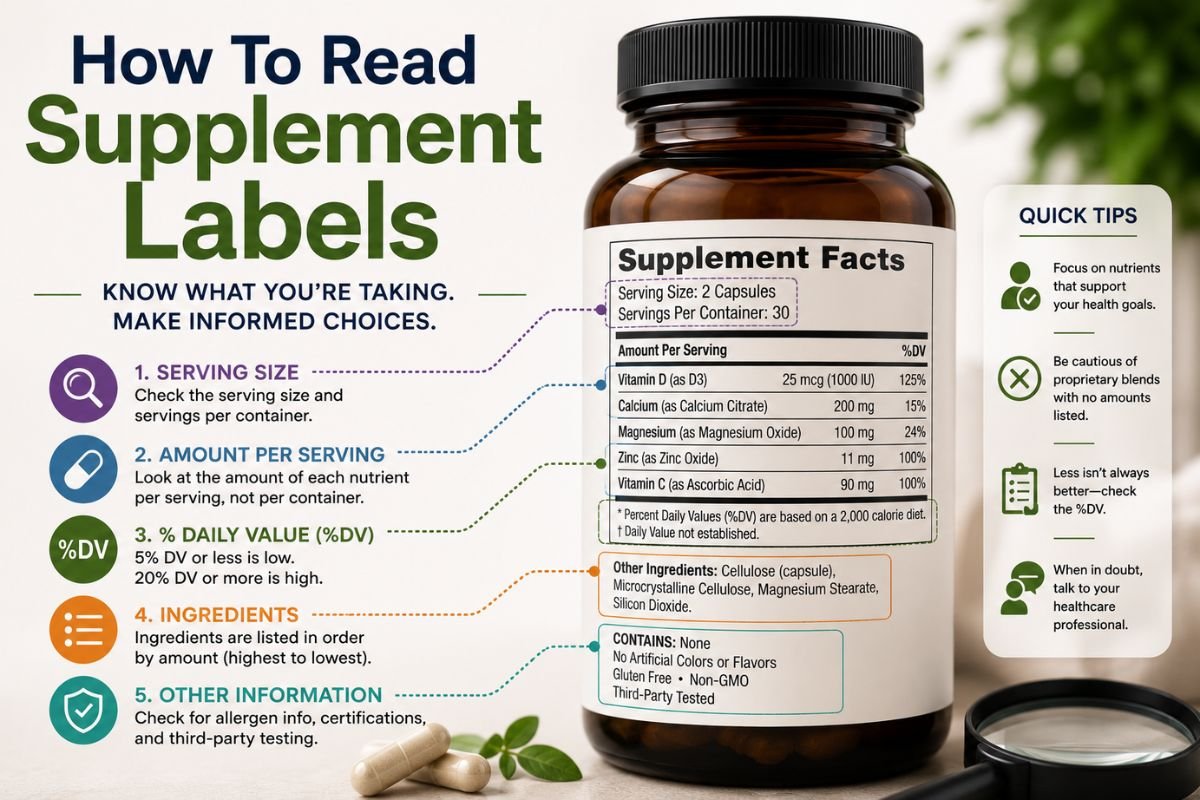
Walk into any pharmacy, grocery store, or health shop in the United States, and you’ll likely find shelves packed with dietary supplements. From multivitamins and fish oil capsules to probiotics and herbal extracts, consumers have more choices than ever. However, understanding what’s actually on a supplement label can be confusing, especially for first-time buyers.
Learning how to read supplement labels is an important step toward making informed health decisions. This guide explains the key sections of a supplement label and provides real-life examples to help American consumers shop with confidence.
Why Supplement Labels Matter
Supplement labels contain valuable information about what you’re putting into your body. They can help you determine the ingredients, serving size, dosage, and other important details before purchasing a product.
Many people make the mistake of buying supplements based solely on marketing claims or attractive packaging. Reading the label carefully can help you better understand the product and avoid unnecessary confusion.
Start with the Supplement Facts Panel
The most important part of any supplement package is the “Supplement Facts” panel. This section provides detailed information about the ingredients and nutrient amounts.
You will typically find:
- Serving size
- Number of servings per container
- Active ingredients
- Amount per serving
- Percentage of Daily Value (%DV)
Imagine you’re buying a vitamin D supplement. The label may show:
- Serving Size: 1 Softgel
- Vitamin D: 50 mcg (2,000 IU)
- % Daily Value: 250%
This means each softgel provides 50 micrograms of vitamin D, which equals 2,000 International Units (IU) and exceeds the standard Daily Value recommendation.
Understand Serving Size
One of the most overlooked details on supplement labels is the serving size. The nutrient amounts listed apply only to the specified serving.
A bottle of gummies may list:
- Serving Size: 2 Gummies
- Vitamin C: 250 mg
If you take only one gummy, you’re receiving half of the listed amount, not the full 250 mg.
Always check serving size before comparing products.
Pay Attention to % Daily Value (%DV)
The Percentage Daily Value helps consumers understand how much a nutrient contributes to a typical daily diet.
Generally:
- 5% DV or less is considered low
- 20% DV or more is considered high
A multivitamin containing 100% DV of vitamin B12 provides the full recommended daily amount for most healthy adults.
However, a supplement showing 500% or 1,000% DV isn’t necessarily better. More isn’t always needed, and individual nutritional needs vary.
Check the Ingredient List
Beyond the active ingredients, supplement labels also list inactive ingredients. These may include:
- Gelatin
- Cellulose
- Rice flour
- Magnesium stearate
- Natural flavors
People with allergies, dietary restrictions, or specific preferences should review this section carefully.
A vegetarian consumer looking for omega-3 supplements may discover that some softgel products contain gelatin derived from animal sources, while others use plant-based capsules.
Look for Third-Party Testing
In the United States, dietary supplements are regulated differently than prescription medications. Because of this, many consumers look for third-party certifications to verify product quality.
Common organizations include:
- USP (United States Pharmacopeia)
- NSF International
- ConsumerLab
These certifications indicate that the product has undergone additional testing for quality, purity, and ingredient accuracy.
Two magnesium supplements may appear identical. However, one carries a USP verification mark, giving some consumers additional confidence regarding manufacturing standards.
Understand Marketing Claims
Supplement packaging often includes phrases such as:
- Supports immune health
- Promotes heart health
- Helps maintain energy levels
These statements can be useful, but they should not be confused with medical claims.
Most dietary supplements in the U.S. carry a disclaimer stating:
“This statement has not been evaluated by the Food and Drug Administration.”
This means the product is not intended to diagnose, treat, cure, or prevent any disease.
Watch for Proprietary Blends
Some supplements use proprietary blends, which combine multiple ingredients into a single formula.
While this isn’t necessarily a problem, proprietary blends sometimes make it difficult to know the exact amount of each ingredient.
An herbal supplement may list:
“Energy Blend – 500 mg”
The blend may contain caffeine, green tea extract, and ginseng, but the label may not specify how much of each ingredient is included.
Consumers who want precise ingredient information may prefer products that disclose individual amounts.
Check Expiration Dates
Like food products, supplements have expiration or “best by” dates.
Using supplements beyond their recommended date may reduce potency over time.
Before purchasing, especially during sales or clearance events, check the expiration date to ensure you’re buying a fresh product.
Compare Products Carefully
When comparing supplements, don’t focus only on price.
Consider:
- Serving size
- Number of servings
- Active ingredient amounts
- Third-party certifications
- Ingredient quality
A $10 bottle may seem cheaper than a $20 bottle. However, if the cheaper bottle contains only 30 servings while the other contains 90 servings, the higher-priced option may actually offer better value.
Visit our homepage to find the best and most trusted dietary supplements in the United States.
Final Thoughts
Understanding supplement labels doesn’t require a medical degree. By learning how to read the Supplement Facts panel, check serving sizes, review ingredients, and evaluate quality indicators, you can make more informed purchasing decisions.
Whether you’re buying a multivitamin, fish oil supplement, probiotic, or herbal formula, taking a few extra minutes to read the label can help you better understand exactly what you’re getting. Smart supplement shopping starts with knowing how to read the information that’s already on the package.