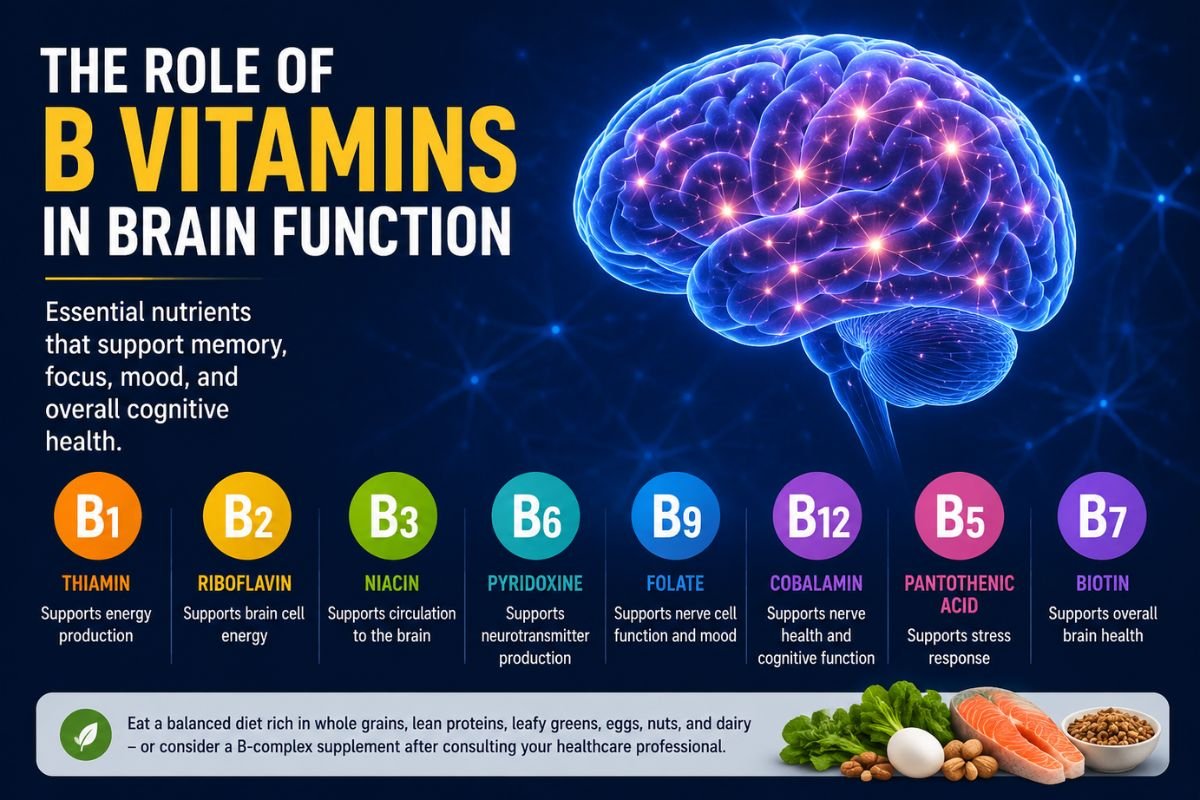
The human brain is one of the most complex organs in the body, responsible for memory, learning, concentration, mood regulation, and countless other functions. To perform these tasks efficiently, the brain relies on a steady supply of nutrients, including a group of essential nutrients known as B vitamins. These water-soluble vitamins play a crucial role in supporting brain health, cognitive performance, and nervous system function.
In the United States, many people focus on nutrients such as omega-3 fatty acids and vitamin D when discussing brain health. However, B vitamins are equally important and are involved in numerous biological processes that help keep the brain functioning properly throughout life.
What Are B Vitamins?
The B-vitamin family consists of eight essential vitamins:
- Vitamin B1 (Thiamine)
- Vitamin B2 (Riboflavin)
- Vitamin B3 (Niacin)
- Vitamin B5 (Pantothenic Acid)
- Vitamin B6 (Pyridoxine)
- Vitamin B7 (Biotin)
- Vitamin B9 (Folate)
- Vitamin B12 (Cobalamin)
Each vitamin has unique functions, but they often work together to support energy production, nerve signaling, and the formation of important brain chemicals.
How B Vitamins Support Brain Function
Energy Production for Brain Cells
Although the brain accounts for only about 2% of total body weight, it consumes roughly 20% of the body’s energy. B vitamins help convert carbohydrates, fats, and proteins from food into usable energy. Vitamins B1, B2, B3, and B5 are especially important in this process.
Without adequate B vitamins, brain cells may struggle to generate the energy needed for optimal performance, potentially affecting focus, alertness, and mental clarity.
Neurotransmitter Production
Neurotransmitters are chemical messengers that allow brain cells to communicate with one another. Several B vitamins contribute to the production and regulation of these important compounds.
Vitamin B6, for example, helps the body produce neurotransmitters such as serotonin, dopamine, and gamma-aminobutyric acid (GABA). These chemicals play key roles in mood, emotional well-being, sleep quality, and cognitive function.
Adequate intake of vitamin B6 may help support healthy neurotransmitter activity, which is essential for maintaining normal brain function.
Supporting Nerve Health
Vitamin B12 and folate are particularly important for maintaining healthy nerve cells. Vitamin B12 helps preserve the protective covering around nerves known as the myelin sheath. This sheath allows electrical signals to travel efficiently throughout the nervous system.
When B12 levels become too low, nerve communication may be impaired, potentially leading to symptoms such as memory difficulties, confusion, or numbness and tingling in the extremities.
Older adults in the United States may be at greater risk of B12 deficiency because the body’s ability to absorb the vitamin can decline with age.
B Vitamins and Cognitive Health
Researchers continue to study the relationship between B vitamins and cognitive performance. Folate, vitamin B6, and vitamin B12 help regulate levels of an amino acid called homocysteine.
Elevated homocysteine levels have been associated with various health concerns, including cardiovascular and cognitive issues. Maintaining healthy levels of these B vitamins may help support normal homocysteine metabolism and contribute to overall brain health.
While B vitamins are not a cure for age-related cognitive decline, ensuring adequate intake may support healthy brain aging as part of a balanced lifestyle.
Mood and Mental Well-Being
Mental health is an important aspect of overall wellness. Several B vitamins contribute to normal psychological function by supporting neurotransmitter production and energy metabolism.
Folate and vitamin B12 have received particular attention in research related to mood support. Low levels of these vitamins may be associated with reduced production of certain neurotransmitters involved in emotional regulation.
Although dietary supplements should not replace professional mental health care, maintaining adequate B-vitamin intake can be an important component of supporting overall mental wellness.
Common Dietary Sources of B Vitamins
Many foods commonly consumed in the United States provide B vitamins. Good sources include:
- Whole grains and fortified cereals
- Lean meats and poultry
- Fish and seafood
- Eggs
- Dairy products
- Leafy green vegetables
- Legumes and beans
- Nuts and seeds
- Avocados
- Citrus fruits
Vitamin B12 is found primarily in animal-based foods, making supplementation or fortified foods especially important for some vegetarians and vegans.
Who May Be at Risk of Deficiency?
Although many Americans obtain sufficient B vitamins through their diets, certain groups may be at increased risk of deficiency, including:
- Older adults
- Vegetarians and vegans
- Individuals with digestive disorders
- People following highly restrictive diets
- Those with certain medical conditions that affect nutrient absorption
Regular health checkups and appropriate nutritional guidance can help identify and address potential deficiencies.
Should You Consider a B-Complex Supplement?
A balanced diet remains the best way to obtain essential nutrients. However, some individuals may benefit from a B-complex supplement if dietary intake is insufficient or if they have specific nutritional needs.
Before starting any supplement, it is advisable to consult a healthcare professional, particularly if you have underlying health conditions or take prescription medications.
Conclusion
B vitamins play a vital role in maintaining healthy brain function. From supporting energy production and neurotransmitter synthesis to promoting nerve health and cognitive performance, these essential nutrients contribute to many aspects of mental well-being.
For Americans seeking to support long-term brain health, focusing on a nutrient-rich diet that includes adequate amounts of B vitamins can be a valuable step. Combined with regular exercise, quality sleep, stress management, and routine healthcare, proper nutrition helps create a strong foundation for cognitive wellness throughout life.