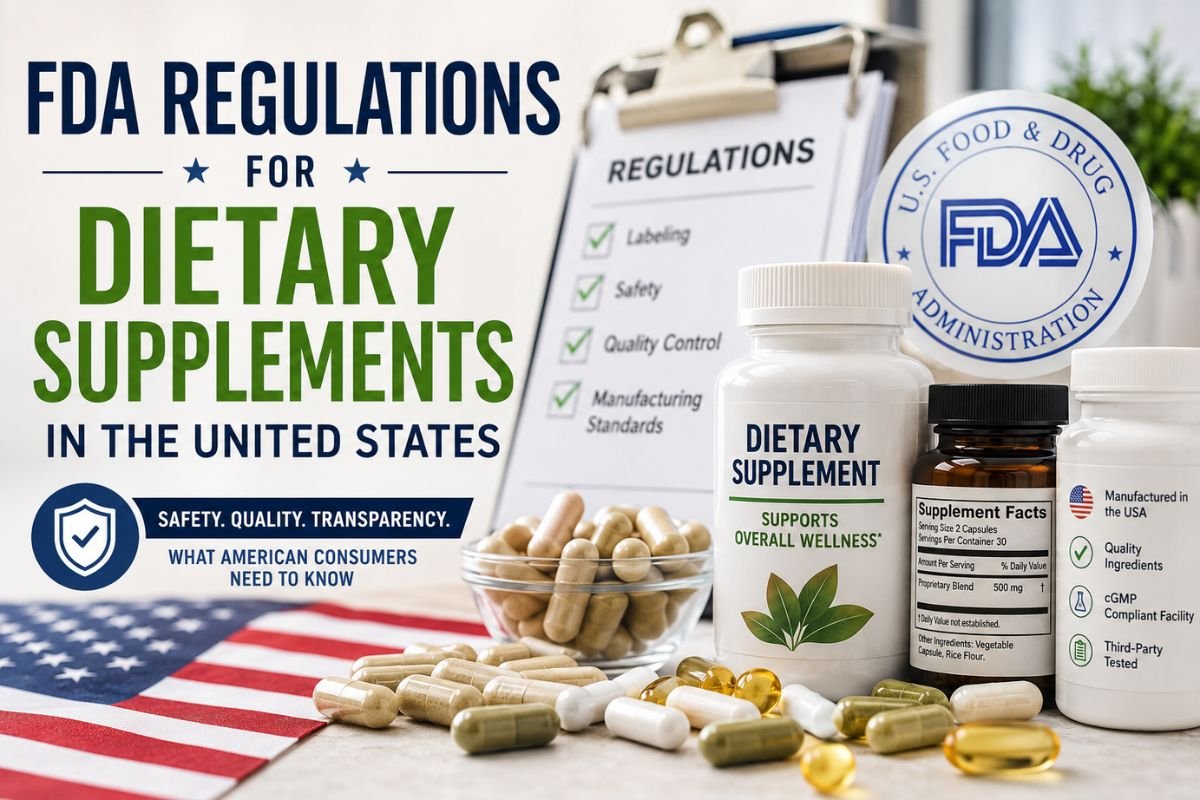
Dietary supplements have become a major part of daily health routines for millions of Americans. From multivitamins and protein powders to herbal extracts and wellness formulas, consumers spend billions of dollars each year on products designed to support various aspects of health. However, many people are surprised to learn that dietary supplements are regulated differently than prescription and over-the-counter medications.
Understanding how the U.S. Food and Drug Administration (FDA) regulates dietary supplements can help consumers make more informed decisions and avoid misleading claims.
What Is a Dietary Supplement?
According to federal law, a dietary supplement is a product intended to supplement the diet and may contain vitamins, minerals, herbs, amino acids, enzymes, or other dietary ingredients. These products are available in various forms, including capsules, tablets, powders, gummies, and liquids.
Popular examples include vitamin D supplements, fish oil capsules, probiotics, and herbal products such as turmeric or ashwagandha.
The Dietary Supplement Health and Education Act (DSHEA)
The foundation of modern supplement regulation in the United States is the Dietary Supplement Health and Education Act (DSHEA), which was signed into law in 1994.
Under DSHEA, dietary supplements are regulated as a category of food rather than drugs. This distinction significantly impacts how products are reviewed and monitored before reaching consumers.
Unlike pharmaceutical drugs, dietary supplements do not require FDA approval before being sold to the public in most cases.
Are Supplements FDA Approved?
One of the most common misconceptions among consumers is that all supplements sold in stores have been reviewed and approved by the FDA.
In reality, the FDA generally does not approve dietary supplements before they are marketed. Instead, manufacturers are responsible for ensuring that their products are safe and that label claims are truthful and not misleading.
The FDA typically becomes involved after products enter the marketplace through inspections, adverse event monitoring, warning letters, and enforcement actions.
Real-Life Example
In 2019, the FDA issued warning letters to several companies marketing products that claimed to prevent, treat, or cure serious diseases without sufficient scientific evidence. These companies were required to remove or correct misleading claims that violated federal regulations.
This example demonstrates that the FDA actively monitors the supplement market, even though products are not routinely approved before sale.
Manufacturing Requirements for Supplement Companies
Dietary supplement manufacturers must comply with Current Good Manufacturing Practices (cGMPs). These regulations help ensure that products are consistently produced and properly labeled.
Manufacturers are expected to:
- Verify ingredient identity
- Maintain quality control procedures
- Test products for contamination
- Keep detailed production records
- Ensure accurate labeling
Failure to follow these standards can result in FDA enforcement actions.
Real-Life Example
Over the years, the FDA has issued recalls involving supplements contaminated with harmful substances or products that contained ingredients not listed on the label. These actions help protect consumers from potentially unsafe products.
What Claims Can Supplement Companies Make?
Supplement companies are allowed to make certain types of statements, but strict rules apply.
Structure/Function Claims
These claims describe how a product may support normal body functions.
Examples include:
- “Supports immune health”
- “Promotes healthy digestion”
- “Helps maintain joint mobility”
These statements are generally permitted when properly substantiated.
Disease Claims
Supplement companies cannot legally claim that their products diagnose, treat, cure, or prevent diseases unless specifically authorized.
For example:
- “Supports healthy blood sugar levels” may be allowed.
- “Cures diabetes” would generally be prohibited.
This distinction helps prevent consumers from being misled about a product’s capabilities.
Understanding the FDA Disclaimer
Many supplement labels contain a familiar disclaimer:
“These statements have not been evaluated by the Food and Drug Administration. This product is not intended to diagnose, treat, cure, or prevent any disease.”
This disclaimer is required when companies use structure/function claims. It reminds consumers that the FDA has not evaluated those specific statements.
New Dietary Ingredients
When a company introduces a new dietary ingredient that was not marketed in the United States before October 15, 1994, it may need to submit a New Dietary Ingredient (NDI) notification to the FDA.
This process provides safety information about the ingredient before widespread marketing.
However, not all new products require FDA approval, which remains one of the most debated aspects of supplement regulation.
How Consumers Can Protect Themselves
Although many supplements are sold responsibly, consumers should take steps to evaluate products carefully.
Read Labels Carefully
Look for ingredient lists, serving sizes, and any health claims.
Research the Manufacturer
Established companies often provide detailed information about sourcing, testing, and quality standards.
Be Skeptical of Extraordinary Claims
Products claiming to provide instant cures or dramatic health transformations should be approached with caution.
Consult Healthcare Professionals
Before starting a new supplement, especially if you take medications or have medical conditions, consult a qualified healthcare provider.
The FDA’s Role Today
The FDA continues to monitor dietary supplements through inspections, consumer complaints, adverse event reporting systems, product testing, and enforcement actions.
When safety concerns arise, the agency can issue warning letters, seize products, request recalls, or pursue legal action against companies that violate regulations.
While the current system places significant responsibility on manufacturers, the FDA remains an important safeguard for protecting public health.
>>> Visit our homepage to find the best and most trusted dietary supplements in the United States. <<<
Conclusion
FDA regulations for dietary supplements in the United States are designed to balance consumer access with safety oversight. Unlike prescription drugs, supplements are generally not approved by the FDA before entering the market. Instead, manufacturers are responsible for product safety, accurate labeling, and compliance with federal regulations.
For American consumers, understanding these rules can help separate trustworthy products from misleading marketing claims. By researching supplements carefully, reading labels, and consulting healthcare professionals when necessary, individuals can make more informed decisions about the products they choose to use.