Vitamin B Complex Benefits: What Does Vitamin B Do?
Quick Answer
Vitamin B complex provides eight essential B vitamins that help convert food into energy, support brain and nervous system function, promote healthy red blood cell production, maintain healthy skin, and contribute to heart health. A balanced diet is the best source, but supplements may help individuals with increased nutritional needs or dietary deficiencies.
Vitamin B complex refers to a group of eight essential B vitamins that work together to support energy production, brain function, red blood cell formation, and overall health. Because these vitamins are water-soluble, the body does not store most of them in large amounts, making regular intake through a balanced diet important.
The vitamin B complex benefits extend far beyond energy support. These nutrients contribute to healthy metabolism, nervous system function, heart health, skin health, and cognitive performance. Whether you are looking to maintain your daily wellness or address nutritional gaps, understanding the role of vitamin B complex can help you make informed decisions.
What Is Vitamin B Complex? What Does Vitamin B Do?
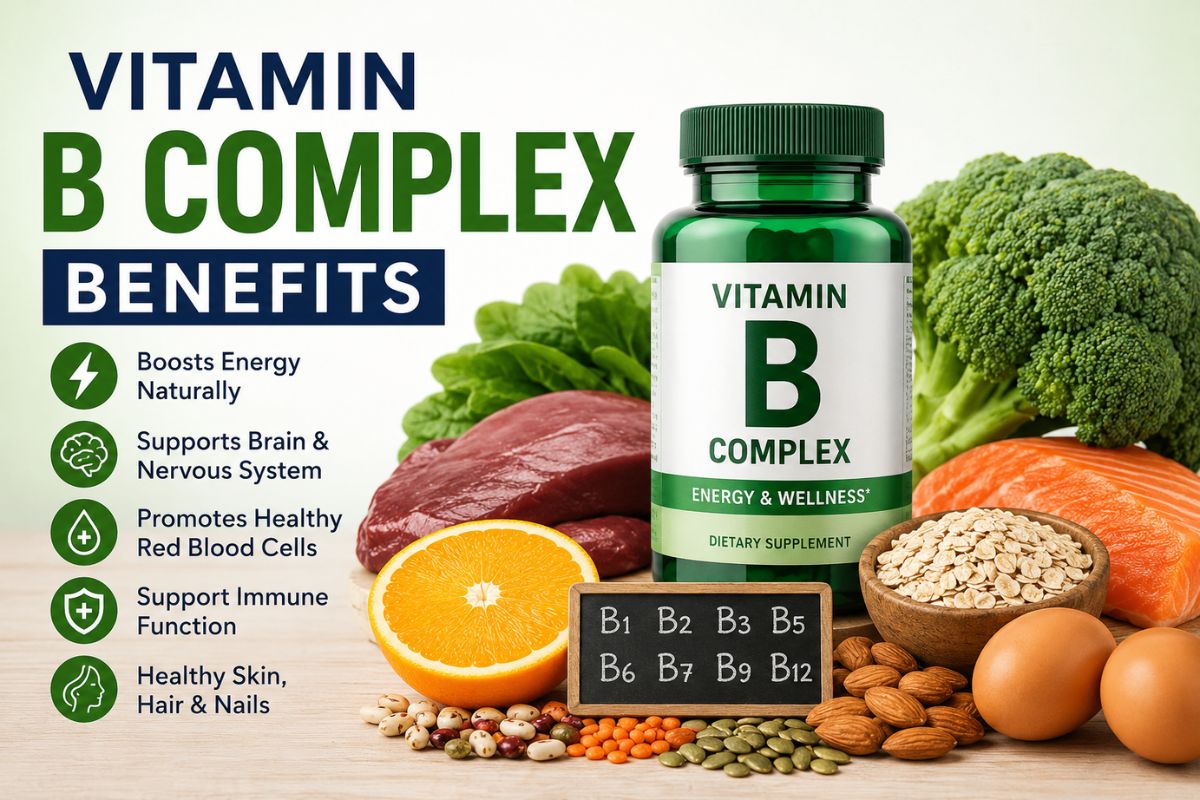
Vitamin B complex includes eight different vitamins, each with unique functions:
- Vitamin B1 (Thiamine)
- Vitamin B2 (Riboflavin)
- Vitamin B3 (Niacin)
- Vitamin B5 (Pantothenic Acid)
- Vitamin B6 (Pyridoxine)
- Vitamin B7 (Biotin)
- Vitamin B9 (Folate)
- Vitamin B12 (Cobalamin)
Although each vitamin performs specific tasks, they often work together to support many important processes throughout the body.
Top Vitamin B Complex Benefits
1. Supports Healthy Energy Production
One of the most recognized vitamin B complex benefits is its role in converting carbohydrates, fats, and proteins into usable energy. These vitamins help enzymes break down nutrients from food, allowing your body to produce the energy needed for daily activities.
While vitamin B complex does not directly increase energy in healthy individuals, correcting a deficiency may help improve feelings of fatigue associated with low vitamin levels.
2. Promotes Brain and Nervous System Health
Several B vitamins contribute to healthy brain function and communication between nerve cells.
Vitamin B6, folate, and vitamin B12 are involved in the production of neurotransmitters that help regulate mood, memory, and cognitive function. Adequate intake supports normal nervous system function throughout adulthood.
3. Helps Form Healthy Red Blood Cells
Vitamin B12 and folate are essential for producing healthy red blood cells.
Insufficient intake of these vitamins may contribute to certain types of anemia, which can cause symptoms such as fatigue, weakness, and reduced concentration.
Maintaining adequate intake supports healthy oxygen transport throughout the body.
4. Supports Heart Health
Certain B vitamins help regulate homocysteine, an amino acid found in the blood. Elevated homocysteine levels have been associated with cardiovascular risk in some studies.
Folate, vitamin B6, and vitamin B12 work together in homocysteine metabolism as part of normal cardiovascular health.
5. Contributes to Healthy Skin, Hair, and Nails
Biotin (vitamin B7) is widely recognized for supporting healthy hair, skin, and nails.
Riboflavin and niacin also contribute to maintaining healthy skin and normal tissue growth. While supplements are not necessary for everyone, adequate intake helps support normal skin health.
6. Supports Healthy Pregnancy
Folate is especially important for women who are pregnant or planning pregnancy.
Adequate folate intake before conception and during early pregnancy supports healthy fetal neural tube development. Healthcare providers often recommend folic acid supplementation for women of childbearing age.
7. Helps Maintain a Healthy Immune System
Vitamin B6 plays an important role in supporting normal immune function by helping the body produce immune cells and antibodies.
Maintaining adequate vitamin intake supports overall immune health alongside a nutritious diet and healthy lifestyle.
Food Sources of Vitamin B Complex
Many foods naturally contain B vitamins, including:
- Whole grains
- Eggs
- Dairy products
- Poultry
- Fish
- Lean meat
- Leafy green vegetables
- Beans and lentils
- Nuts and seeds
- Fortified breakfast cereals
Eating a varied diet is the best way to obtain these essential nutrients.
Who May Benefit from a Vitamin B Complex Supplement?
Some individuals may have higher nutritional needs or difficulty obtaining enough B vitamins through diet alone, including:
- Older adults
- Vegetarians and vegans (especially for vitamin B12)
- Pregnant women
- Individuals with certain digestive disorders
- People taking medications that affect nutrient absorption
A healthcare professional can determine whether supplementation is appropriate based on individual needs.
Can You Get Too Much Vitamin B?
Most B vitamins are water-soluble, meaning excess amounts are generally excreted through urine. However, taking high-dose supplements unnecessarily may increase the risk of side effects.
For example, excessive vitamin B6 intake over long periods has been associated with nerve-related problems in some individuals.
Always follow the recommended dosage on the product label unless advised otherwise by your healthcare provider.
Indo Health is dedicated to helping you discover the best and most trusted dietary supplements available in the United States.
Frequently Asked Questions
Q. What is the main benefit of vitamin B complex?
Vitamin B complex primarily supports energy metabolism, brain function, nervous system health, and red blood cell production.
Q. Is it okay to take vitamin B complex every day?
Many vitamin B complex supplements are formulated for daily use. Follow the manufacturer’s instructions and consult your healthcare provider if you have medical conditions or take prescription medications.
Q. Does vitamin B complex improve energy?
Vitamin B vitamins help convert food into energy. If you have a deficiency, correcting it may improve fatigue related to low vitamin levels.
Q. Who should consider vitamin B complex supplements?
People with dietary restrictions, older adults, pregnant women, and individuals diagnosed with vitamin deficiencies may benefit from supplementation under professional guidance.
Conclusion
The many vitamin B complex benefits make these essential nutrients an important part of a healthy lifestyle. From supporting energy production and brain function to maintaining healthy red blood cells and promoting heart health, B vitamins play vital roles throughout the body.
For most people, a balanced diet rich in whole grains, lean proteins, vegetables, legumes, and dairy products provides adequate amounts of these nutrients. However, certain individuals may benefit from supplementation after consulting a qualified healthcare professional.
References
- National Institutes of Health – B Vitamins Overview
https://ods.od.nih.gov/factsheets/list-all/ - National Institutes of Health – Vitamin B12 Fact Sheet for Consumers
https://ods.od.nih.gov/factsheets/VitaminB12-Consumer/ - National Institutes of Health – Folate Fact Sheet for Consumers
https://ods.od.nih.gov/factsheets/Folate-Consumer/ - MedlinePlus – B Vitamins
https://medlineplus.gov/bvitamins.html - Harvard T.H. Chan School of Public Health – The Nutrition Source: B Vitamins
https://nutritionsource.hsph.harvard.edu/b-vitamins/
Health Disclaimer: This article is for informational purposes only and should not be considered medical advice. Always consult a qualified healthcare professional before starting any new vitamin or dietary supplement, especially if you are pregnant, nursing, taking medications, or have an existing medical condition.