CoQ10 Side Effects and Warnings
Quick Answer
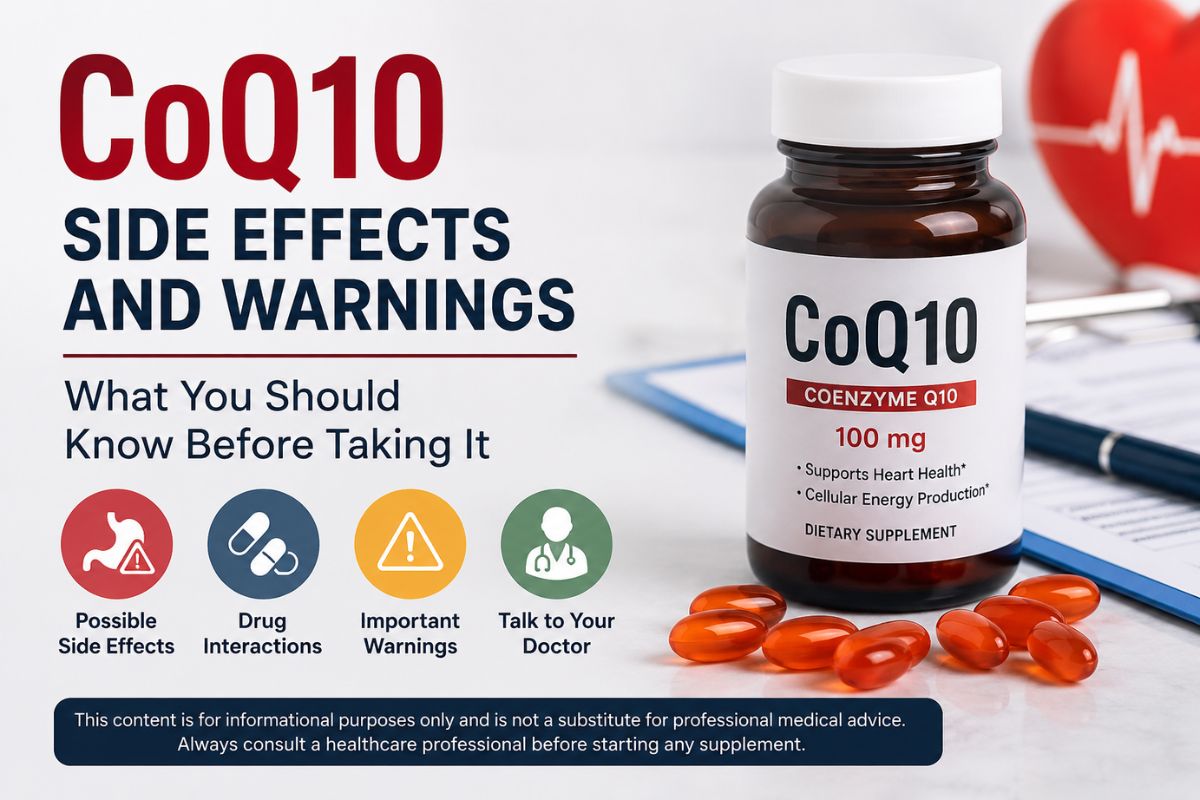
CoQ10 is usually well tolerated, but it may cause mild side effects such as nausea, diarrhea, stomach discomfort, headache, dizziness, tiredness, rash, or trouble sleeping. It may also interact with warfarin, insulin, and some cancer treatments, so speak with a healthcare professional before using it if you take prescription medicines or have a medical condition.
Coenzyme Q10, commonly called CoQ10, is a compound made naturally in the body. It plays a role in cellular energy production and is also available as a dietary supplement. Some people use it for general wellness, migraine prevention, heart-related concerns, or because they take statin medicines.
Although CoQ10 is often well tolerated, “natural” does not automatically mean risk-free. Like other supplements, it may cause side effects, interact with medications, or be unsuitable in certain health situations. This guide explains the most important CoQ10 side effects and warnings in simple language.
Common CoQ10 Side Effects
Most reported CoQ10 side effects are mild. They may improve after stopping the supplement, but persistent symptoms should be discussed with a doctor, pharmacist, or other qualified healthcare professional.
| Possible Side Effect | What It May Feel Like | What to Do |
|---|---|---|
| Stomach discomfort | Upper stomach pain or indigestion | Stop and seek advice if symptoms continue |
| Nausea | Feeling sick or unsettled | Review the supplement with a clinician |
| Diarrhea | Loose or frequent bowel movements | Stay hydrated and ask for advice if persistent |
| Loss of appetite | Reduced interest in food | Speak with a clinician if ongoing |
| Headache | Mild to moderate head pain | Stop using it if headaches are frequent or severe |
| Dizziness | Lightheaded or unsteady feeling | Avoid driving and seek medical guidance |
| Trouble sleeping | Difficulty falling asleep or staying asleep | Avoid continuing without professional advice |
| Rash or irritation | New skin redness, itching, or rash | Stop the supplement and seek medical advice |
Mayo Clinic lists stomach pain, appetite loss, nausea, diarrhea, dizziness, sleep problems, tiredness, headaches, rash, and irritability among possible CoQ10 side effects.
The National Center for Complementary and Integrative Health also notes that digestive upset and insomnia may occur.
CoQ10 Warnings and Drug Interactions
The biggest concern with CoQ10 is not usually a mild stomach issue. It is the possibility that the supplement could affect the way a prescription medicine works.
Always tell your doctor and pharmacist about every vitamin, herb, powder, capsule, gummy, or supplement you use.
| Medicine or Situation | Why Caution Is Needed | What to Do |
|---|---|---|
| Warfarin | CoQ10 may affect how warfarin works | Do not start or stop CoQ10 without the prescriber’s approval |
| Insulin or diabetes treatment | CoQ10 may interact with insulin | Discuss use with the clinician managing your blood sugar |
| Cancer treatment | CoQ10 may not be compatible with some treatments | Ask your oncology team before using it |
| Theophylline | CoQ10 may affect how the medicine is cleared from the body | Speak with your prescriber or pharmacist first |
| Multiple supplements | Ingredients may overlap or increase side-effect risk | Review all labels together |
| Surgery or dental procedures | Supplements can affect medical care or anesthesia planning | Tell your surgical team well in advance |
1. Warfarin Warning
Warfarin is a prescription blood thinner used to help prevent harmful blood clots. CoQ10 may make warfarin work less effectively, which could increase the risk of clot-related problems.
This interaction is important because warfarin dosing is carefully managed. Do not begin, stop, or change a CoQ10 routine on your own if you take warfarin.
2. Diabetes Medicine Warning
The National Center for Complementary and Integrative Health states that CoQ10 may interact with insulin. Anyone using insulin or other diabetes medicines should discuss CoQ10 with the clinician managing their blood sugar.
Do not change the dose of a diabetes medicine based on how you feel after starting a supplement.
3. Cancer Treatment Warning
People receiving chemotherapy, radiation, hormone therapy, or other cancer treatment should not add CoQ10 without speaking with their oncology team first. NCCIH notes that CoQ10 may not be compatible with some cancer treatments. Memorial Sloan Kettering also advises caution because antioxidant supplements may affect certain chemotherapy or radiation approaches.
This does not mean every person receiving cancer treatment must avoid CoQ10. It means the decision should be made with the oncology team that understands the full treatment plan.
Who Should Speak With a Healthcare Professional Before Taking CoQ10?
CoQ10 may not be a good self-care choice for everyone. Ask a qualified healthcare professional before using it if you:
- Take warfarin or another medicine that affects blood clotting
- Use insulin or prescription medicine for diabetes
- Are pregnant, trying to become pregnant, or breastfeeding
- Receive chemotherapy, radiation, or other cancer treatment
- Have a chronic medical condition
- Take several prescriptions or supplements
- Are scheduled for surgery or a dental procedure
- Plan to give CoQ10 to a child
Healthcare professionals have not determined whether CoQ10 is safe during pregnancy or breastfeeding. Do not use it during these times without professional approval.
How to Lower the Risk of Side Effects
A few simple habits can reduce avoidable supplement problems:
- Read the complete Supplement Facts label before buying.
- Follow the manufacturer’s serving instructions unless your clinician gives different advice.
- Do not combine several products containing CoQ10 without checking the total amount.
- Avoid using a supplement as a replacement for prescribed medicine.
- Keep a list of every supplement and medicine you take.
- Tell your doctor, pharmacist, and dentist about CoQ10 use.
- Stop using the product and seek advice if you develop new or troubling symptoms.
NIH guidance notes that supplement side effects are more likely when people use high doses, take many products, replace prescribed treatment, or combine supplements with medications.
When Should You Stop Taking CoQ10?
Stop taking CoQ10 and contact a healthcare professional if you develop:
- Ongoing nausea, diarrhea, or stomach pain
- A new rash or skin reaction
- Severe headaches or frequent dizziness
- Sleep problems that affect daily life
- Unexplained tiredness or weakness
- Any new symptom that begins after starting the supplement
Seek urgent medical care for severe symptoms, such as trouble breathing, swelling of the face or throat, fainting, chest pain, or signs of a serious reaction.
Does CoQ10 Cause Serious Side Effects?
Serious side effects have not commonly been reported in available safety information, but that does not mean CoQ10 is appropriate for everyone. Individual risk depends on the product, dose, other supplements, prescription medicines, health conditions, and treatment plan.
The most important safety step is discussing CoQ10 with a healthcare professional when you take medication or manage a medical condition.
Indo Health is dedicated to helping you discover the best and most trusted dietary supplements available in the United States.
What CoQ10 Cannot Do
CoQ10 is a dietary supplement, not a replacement for medical treatment. It should not be used to diagnose, treat, cure, or prevent a disease without advice from a qualified healthcare professional.
The U.S. Food and Drug Administration does not approve dietary supplements for safety and effectiveness before they are sold in the same way it approves prescription drugs. Be cautious of products that promise dramatic energy boosts, disease cures, rapid weight loss, or guaranteed heart benefits.
Frequently Asked Questions
Q. Can CoQ10 upset your stomach?
Yes. Nausea, diarrhea, upper stomach pain, and reduced appetite are among the possible digestive side effects reported with CoQ10.
Q. Can CoQ10 cause insomnia?
It may. Trouble sleeping or insomnia is listed as a possible CoQ10 side effect.
Q. Can you take CoQ10 with warfarin?
Do not start CoQ10 while taking warfarin without discussing it with the clinician who prescribes your warfarin. CoQ10 may affect how warfarin works.
Q. Is CoQ10 safe during pregnancy?
Safety during pregnancy and breastfeeding has not been established. Use it only with approval from your obstetrician or healthcare professional.
Final Thoughts
CoQ10 may be well tolerated by many adults, but it can still cause side effects and important medication interactions. Digestive upset, headaches, dizziness, tiredness, rash, and sleep problems are possible.
The strongest CoQ10 warnings involve warfarin, insulin or diabetes treatment, cancer care, pregnancy, breastfeeding, surgery, and complex medication routines. Before adding CoQ10 to your routine, review your full medication and supplement list with a qualified healthcare professional.
Health Disclaimer: This article is for general educational purposes only and is not medical advice. It does not diagnose, treat, cure, or prevent any disease. Always speak with a doctor, pharmacist, registered dietitian, or other qualified healthcare professional before starting, stopping, or changing any supplement, especially if you take prescription medicine, are pregnant or breastfeeding, have a health condition, or receive cancer treatment.
References
- National Center for Complementary and Integrative Health: Coenzyme Q10
- Mayo Clinic: Coenzyme Q10
- MedlinePlus: Warfarin Drug Information
- Memorial Sloan Kettering Cancer Center: Coenzyme Q10
- NIH Office of Dietary Supplements: Dietary Supplements—What You Need to Know
- U.S. Food and Drug Administration: Questions and Answers on Dietary Supplements