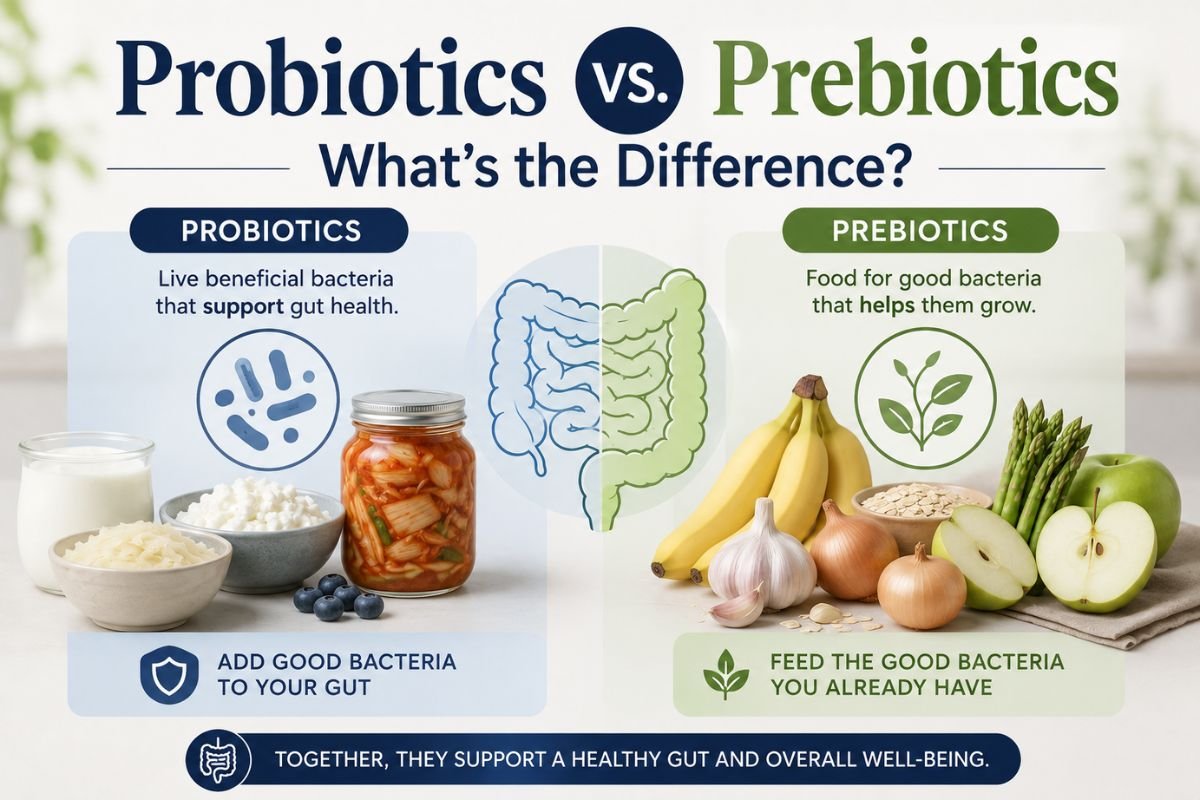
Gut health has become a major topic in the United States as more people recognize the connection between digestion, immunity, and overall wellness. If you’ve ever browsed the yogurt aisle, watched a health segment on TV, or read nutrition labels, you’ve probably come across the terms probiotics and prebiotics. While they sound similar, they serve different roles in supporting your digestive system.
Understanding the difference between probiotics and prebiotics can help you make informed choices about the foods you eat and how they may contribute to a healthy gut.
What Are Probiotics?
Probiotics are live microorganisms—often called “good” or “friendly” bacteria—that can help maintain a balanced gut environment when consumed in adequate amounts.
Your digestive system naturally contains trillions of bacteria, both beneficial and harmful. Probiotics help support the growth of beneficial bacteria and contribute to a healthy balance within the gut microbiome.
Common Sources of Probiotics
Many Americans consume probiotics through fermented foods and beverages, including:
- Yogurt with live cultures
- Kefir
- Sauerkraut
- Kimchi
- Miso
- Tempeh
- Kombucha
Probiotic supplements are also widely available in pharmacies, grocery stores, and health food retailers.
What Are Prebiotics?
Prebiotics are types of dietary fiber that serve as food for beneficial gut bacteria. Unlike probiotics, prebiotics are not living organisms. Instead, they nourish the helpful bacteria already present in your digestive tract.
Think of it this way:
- Probiotics are the beneficial bacteria.
- Prebiotics are the food that helps those bacteria thrive.
Without enough prebiotics, beneficial bacteria may not receive the nutrients they need to flourish.
Common Sources of Prebiotics
Prebiotics occur naturally in many plant-based foods, including:
- Bananas
- Onions
- Garlic
- Asparagus
- Leeks
- Oats
- Apples
- Chicory root
- Beans and legumes
Many of these foods are already staples in American households, making it relatively easy to increase prebiotic intake.
The Key Difference Between Probiotics and Prebiotics
The simplest way to remember the difference is:
| Probiotics | Prebiotics |
| Live beneficial bacteria | Fiber that feeds beneficial bacteria |
| Found in fermented foods | Found in many fruits, vegetables, and grains |
| Add good bacteria to the gut | Help existing good bacteria grow |
| Examples: yogurt, kefir, kimchi | Examples: bananas, garlic, oats |
Both play important but different roles in maintaining a healthy digestive system.
How They Work Together
Probiotics and prebiotics are often most effective when consumed together because they complement one another.
A healthy gut environment depends not only on having beneficial bacteria but also on providing those bacteria with the nutrients they need to survive.
Potential Benefits of Supporting Gut Health
Research into the gut microbiome continues to grow, and scientists are learning more about its role in overall health.
A balanced gut environment may help support:
1. Digestive Health
Beneficial bacteria contribute to normal digestion and may help maintain digestive comfort.
2. Immune Function
A large portion of the body’s immune system is closely connected to the digestive tract, making gut health an important area of study.
3. Nutrient Absorption
Healthy gut bacteria play a role in helping the body process and utilize certain nutrients from food.
4. Overall Wellness
Many health professionals encourage diets rich in fiber, fruits, vegetables, and fermented foods as part of a balanced lifestyle.
Should You Take Supplements?
While probiotic and prebiotic supplements are popular in the United States, many people can obtain both through everyday foods.
A diet that includes:
- Fruits
- Vegetables
- Whole grains
- Legumes
- Fermented foods
often provides a combination of nutrients that support gut health naturally.
Before starting any supplement regimen, it’s a good idea to consult a healthcare professional, especially if you have existing medical conditions or digestive concerns. On our homepage, we have listed the best and most trusted dietary supplements to help you choose the right one for your needs.
Easy Ways to Add More Probiotics and Prebiotics
If you’re interested in supporting your gut health, consider these simple strategies:
Add Probiotic Foods
- Eat yogurt with live cultures.
- Try kefir as a smoothie base.
- Add fermented foods like sauerkraut to meals.
Increase Prebiotic Foods
- Include bananas in breakfast.
- Cook with onions and garlic.
- Choose oatmeal instead of sugary cereals.
- Add beans to soups, salads, and chili.
Small dietary changes can add up over time.
Final Thoughts
When comparing probiotics vs. prebiotics, it’s important to understand that they are partners rather than competitors. Probiotics introduce beneficial bacteria into the digestive system, while prebiotics provide the nourishment those bacteria need to thrive.
For many Americans, incorporating a mix of fermented foods, fruits, vegetables, whole grains, and legumes into daily meals is a practical way to support gut health. By understanding the unique role of both probiotics and prebiotics, you can make more informed decisions about your nutrition and overall well-being.
