Creatine for Beginners: A Complete Guide
Creatine is one of the most researched and widely used dietary supplements in the fitness and wellness industry. While it is often associated with bodybuilders and athletes, creatine can offer benefits for a much broader range of people, including recreational exercisers, active adults, and even older individuals looking to maintain muscle strength.
If you’re new to supplements and wondering whether creatine is right for you, this beginner-friendly guide explains what creatine is, how it works, its potential benefits, recommended dosage, and common misconceptions.
What Is Creatine?
Creatine is a naturally occurring compound found in your muscles and brain. Your body produces creatine from amino acids, and you can also obtain it from foods such as red meat, poultry, and fish.
Approximately 95% of the body’s creatine is stored in skeletal muscles, where it plays an important role in energy production. During high-intensity activities like sprinting, weightlifting, or other short bursts of exercise, creatine helps your muscles generate energy quickly.
Because natural food sources contain relatively small amounts, many people choose creatine supplements to increase their body’s creatine stores.
How Does Creatine Work?
Your muscles rely on a molecule called adenosine triphosphate (ATP) for energy. However, ATP supplies are limited and can be depleted quickly during intense exercise.
Creatine helps replenish ATP more efficiently, allowing your muscles to sustain performance during short-duration, high-intensity activities. This can support improved workout performance, increased training volume, and better recovery between exercise sessions.
In simple terms, creatine acts like an extra energy reserve for your muscles.
Benefits of Creatine Supplementation
1. Supports Muscle Growth
One of the primary reasons people take creatine is its ability to support muscle growth when combined with resistance training. Increased training performance can help individuals lift heavier weights or perform more repetitions over time.
2. Enhances Exercise Performance
Research suggests that creatine may improve strength, power output, and athletic performance during activities that involve short bursts of intense effort.
3. Improves Recovery
Some studies indicate that creatine may help reduce muscle damage and inflammation following intense exercise, potentially supporting faster recovery.
4. Supports Healthy Aging
Maintaining muscle mass becomes increasingly important as people age. Combined with regular exercise, creatine may help older adults preserve muscle strength and physical function.
5. Potential Cognitive Benefits
Emerging research suggests that creatine may play a role in supporting brain function and mental performance, particularly during periods of sleep deprivation or mental fatigue. More studies are needed in this area, but early findings are promising.
Types of Creatine
There are several forms of creatine available on the market, including:
- Creatine Monohydrate
- Creatine Hydrochloride (HCl)
- Buffered Creatine
- Creatine Ethyl Ester
- Micronized Creatine
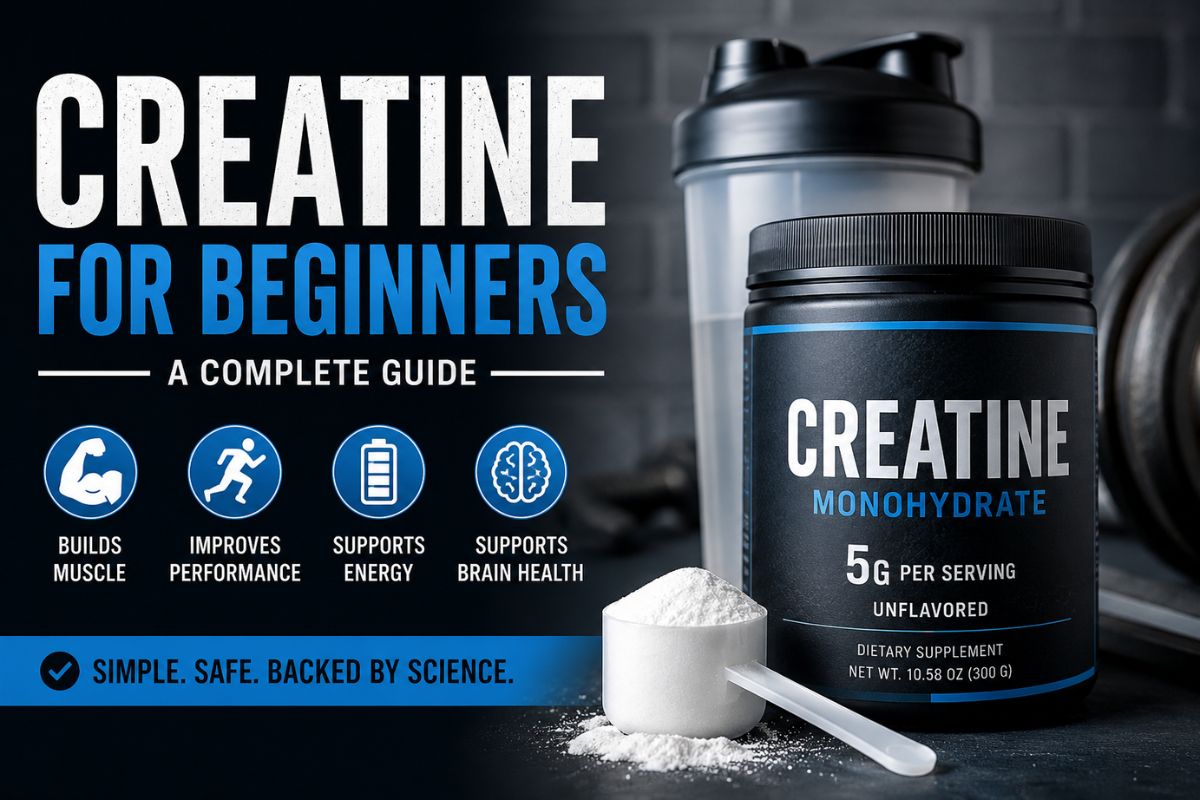
For beginners, creatine monohydrate is generally considered the gold standard. It is the most researched form, widely available, affordable, and supported by decades of scientific evidence.
How Much Creatine Should Beginners Take?
Most beginners can benefit from taking:
3 to 5 grams of creatine monohydrate daily
Some people choose a loading phase, which typically involves taking 20 grams per day divided into four servings for 5–7 days, followed by a maintenance dose of 3–5 grams daily.
However, a loading phase is not required. Taking a consistent daily dose of 3–5 grams will gradually increase muscle creatine stores over several weeks.
When Should You Take Creatine?
One of the most common questions beginners ask is when to take creatine.
The good news is that timing is generally less important than consistency. Whether you take creatine before your workout, after your workout, or with a meal, the key is taking it regularly.
Many people find it convenient to mix creatine into a protein shake, smoothie, or glass of water once per day.
Indo Health is dedicated to helping you discover the best and most trusted dietary supplements available in the United States.
Common Myths About Creatine
Myth 1: Creatine Is a Steroid
Creatine is not a steroid. It is a naturally occurring compound found in foods and produced by the body.
Myth 2: Creatine Causes Kidney Damage
Research has shown that creatine is generally safe for healthy individuals when used as directed. People with existing kidney conditions should consult their healthcare provider before using any supplement.
Myth 3: Creatine Causes Excessive Water Retention
Creatine may increase water content within muscle cells, which can contribute to a fuller muscle appearance. However, this is different from bloating or unhealthy water retention.
Myth 4: Only Bodybuilders Need Creatine
Creatine can benefit many active individuals, including recreational gym-goers, runners, older adults, and people looking to support overall physical performance.
Are There Any Side Effects?
Creatine is considered one of the safest sports nutrition supplements available. Most people tolerate it well.
Some individuals may experience mild digestive discomfort if they take large amounts at once. Drinking adequate water and following recommended serving sizes can help minimize potential issues.
Final Thoughts
Creatine remains one of the most effective and well-studied supplements for supporting strength, exercise performance, and muscle health. For beginners, creatine monohydrate offers an affordable, science-backed option that can easily fit into a daily wellness routine.
Whether your goal is building muscle, improving athletic performance, or maintaining strength as you age, creatine may be a valuable addition to a healthy lifestyle that includes regular exercise, balanced nutrition, and proper recovery.
Health Disclaimer
This article is for informational and educational purposes only and should not be considered medical advice. Always consult a qualified healthcare professional before starting any new supplement, especially if you are pregnant, nursing, taking medications, or have an existing medical condition.