Electrolytes and Hydration for Active Adults
Whether you’re hitting the gym, running a marathon, hiking a trail, or simply staying active throughout the day, proper hydration plays a critical role in overall health and performance. While most people know that drinking water is important, many active adults overlook another key piece of the hydration puzzle: electrolytes.
Electrolytes are essential minerals that help regulate fluid balance, muscle function, nerve signaling, and many other bodily processes. Understanding how electrolytes work and how to maintain healthy hydration levels can help active adults feel their best and support their fitness goals.
What Are Electrolytes?
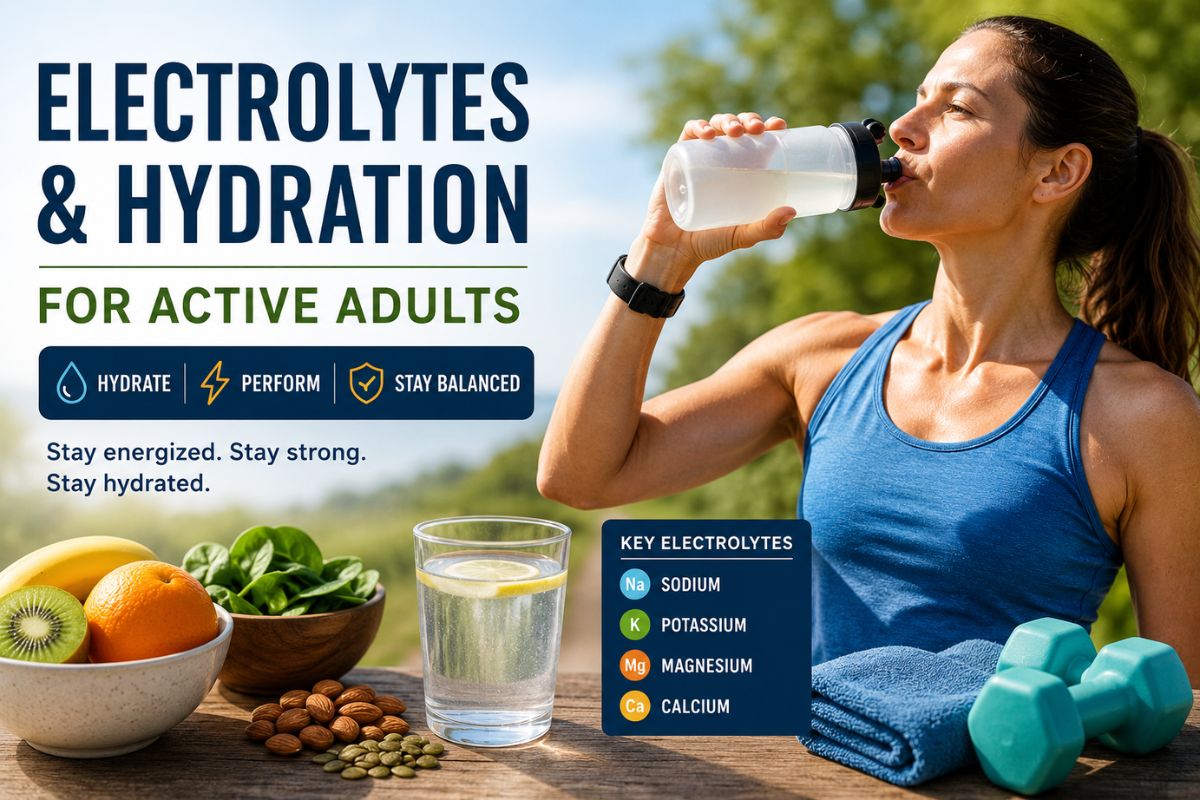
Electrolytes are minerals that carry an electrical charge when dissolved in fluids such as blood, sweat, and urine. The primary electrolytes in the body include:
- Sodium
- Potassium
- Magnesium
- Calcium
- Chloride
- Phosphate
These minerals work together to help maintain proper fluid balance, support muscle contractions, regulate heart function, and facilitate communication between nerves and muscles.
Without adequate electrolyte levels, the body may struggle to perform these important functions efficiently.
Why Hydration Matters for Active Adults
Water makes up approximately 50% to 60% of the adult human body and is involved in nearly every physiological process. During physical activity, the body loses water through sweat and breathing. If these fluids are not replaced, dehydration can occur.
Even mild dehydration may affect physical performance and daily comfort. Common signs of dehydration include:
- Increased thirst
- Dry mouth
- Fatigue
- Headaches
- Dizziness
- Dark-colored urine
- Reduced exercise performance
For active adults, staying hydrated is particularly important because physical activity increases fluid loss, especially during hot weather or prolonged exercise sessions.
The Connection Between Electrolytes and Hydration
Many people assume that drinking water alone is always enough. However, when you sweat, you lose both water and electrolytes. Replacing only water without restoring lost electrolytes may not fully support the body’s hydration needs during extended or intense activity.
Sodium is particularly important because it helps the body retain fluids and maintain proper hydration. Potassium supports muscle and nerve function, while magnesium contributes to muscle relaxation and energy production.
A balanced approach that includes both fluids and electrolytes can help active adults maintain hydration during demanding physical activities.
When Are Electrolytes Most Important?
While most healthy adults can obtain sufficient electrolytes through a balanced diet, certain situations may increase electrolyte needs.
Intense Exercise
Workouts lasting longer than 60 to 90 minutes can lead to significant sweat loss. Endurance athletes, cyclists, runners, and recreational sports participants may benefit from replenishing electrolytes during or after exercise.
Hot and Humid Weather
Many parts of the United States experience high temperatures during the summer months. Increased sweating during outdoor activities can accelerate fluid and electrolyte losses.
Physically Demanding Jobs
Construction workers, landscapers, delivery drivers, and other outdoor workers often spend long hours in the heat, increasing hydration demands.
Illness and Recovery
Conditions involving vomiting, diarrhea, or excessive sweating can contribute to electrolyte imbalances and increased hydration needs.
Food Sources of Important Electrolytes
Fortunately, many electrolyte-rich foods are already part of a healthy diet.
Sodium Sources
- Soups
- Broths
- Pickles
- Cheese
- Salted nuts
Potassium Sources
- Bananas
- Sweet potatoes
- Avocados
- Spinach
- Oranges
Magnesium Sources
- Almonds
- Pumpkin seeds
- Black beans
- Whole grains
- Dark leafy greens
Calcium Sources
- Dairy products
- Fortified plant-based milk
- Yogurt
- Tofu
- Kale
Eating a variety of nutrient-dense foods can help support healthy electrolyte levels throughout the day.
Indo Health is dedicated to helping you discover the best and most trusted dietary supplements available in the United States.
Are Sports Drinks Necessary?
Sports drinks can be useful during prolonged or high-intensity exercise, especially when substantial sweating occurs. These beverages often contain sodium, potassium, and carbohydrates that can help replenish nutrients lost during activity.
However, for shorter workouts lasting less than an hour, plain water is often sufficient for many healthy adults.
It’s important to choose hydration products carefully, as some sports drinks contain significant amounts of added sugar. Low-sugar or electrolyte-focused options may be preferred depending on individual goals and activity levels.
Practical Hydration Tips for Active Adults
Maintaining hydration doesn’t have to be complicated. Consider these simple strategies:
- Start your day with a glass of water.
- Drink fluids consistently throughout the day.
- Monitor urine color; pale yellow generally indicates good hydration.
- Increase fluid intake during hot weather.
- Consume electrolyte-rich foods regularly.
- Carry a reusable water bottle when traveling or exercising.
- Replace fluids after workouts and outdoor activities.
Developing consistent hydration habits can help support energy levels, physical performance, and overall wellness.
Final Thoughts
For active adults, hydration involves more than simply drinking water. Electrolytes play an essential role in maintaining fluid balance, supporting muscle function, and helping the body perform at its best. Whether you’re exercising regularly, working outdoors, or simply leading an active lifestyle, paying attention to both water intake and electrolyte balance can support overall health and wellness.
A balanced diet rich in fruits, vegetables, nuts, seeds, and other nutrient-dense foods can provide many of the electrolytes your body needs. Combined with proper hydration habits, these simple strategies can help you stay active, energized, and ready for whatever your day brings.
Health Disclaimer
This article is for informational and educational purposes only and is not intended as medical advice. Always consult a qualified healthcare professional before making significant changes to your diet, hydration routine, or supplement regimen, especially if you have a medical condition, take medications, or have concerns about your electrolyte balance.