Post-Workout Nutrition Essentials: What to Eat After Exercise?
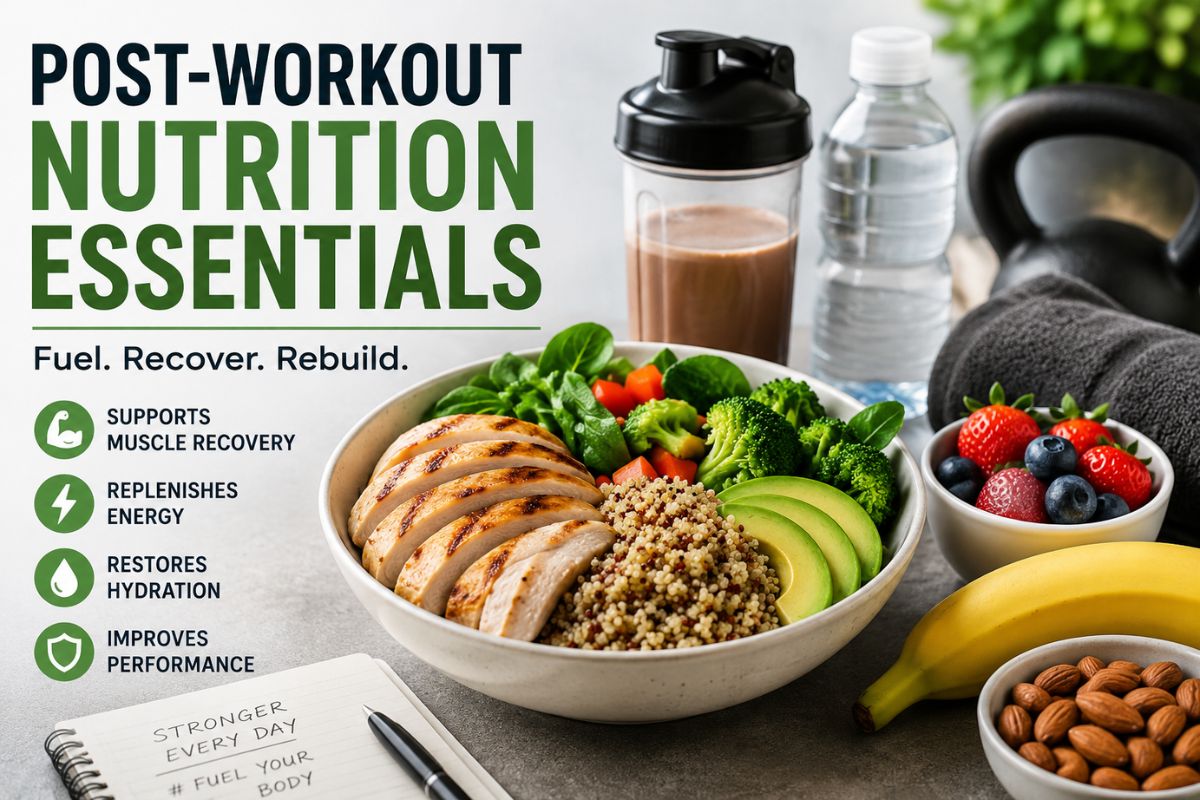
Post-workout nutrition is essential for recovery, muscle repair, and energy replenishment. A balanced post-workout meal should include high-quality protein, healthy carbohydrates, fluids, and important nutrients to help the body recover efficiently. Consuming protein and carbohydrates within a few hours after exercise may support muscle recovery, restore glycogen stores, and prepare the body for future workouts.
Why Post-Workout Nutrition Matters
After a workout, your body enters a recovery phase. During exercise, muscles use stored glycogen for energy and experience small amounts of stress and breakdown. Proper post-workout nutrition helps replenish energy stores and provides the nutrients needed to support recovery.
Many people focus heavily on their workout routine but overlook what happens afterward. However, recovery nutrition can play a significant role in achieving fitness goals, whether those goals involve building muscle, improving endurance, maintaining a healthy weight, or enhancing overall wellness.
Research suggests that consuming adequate nutrients after exercise may help support muscle protein synthesis, improve recovery, and reduce feelings of fatigue.
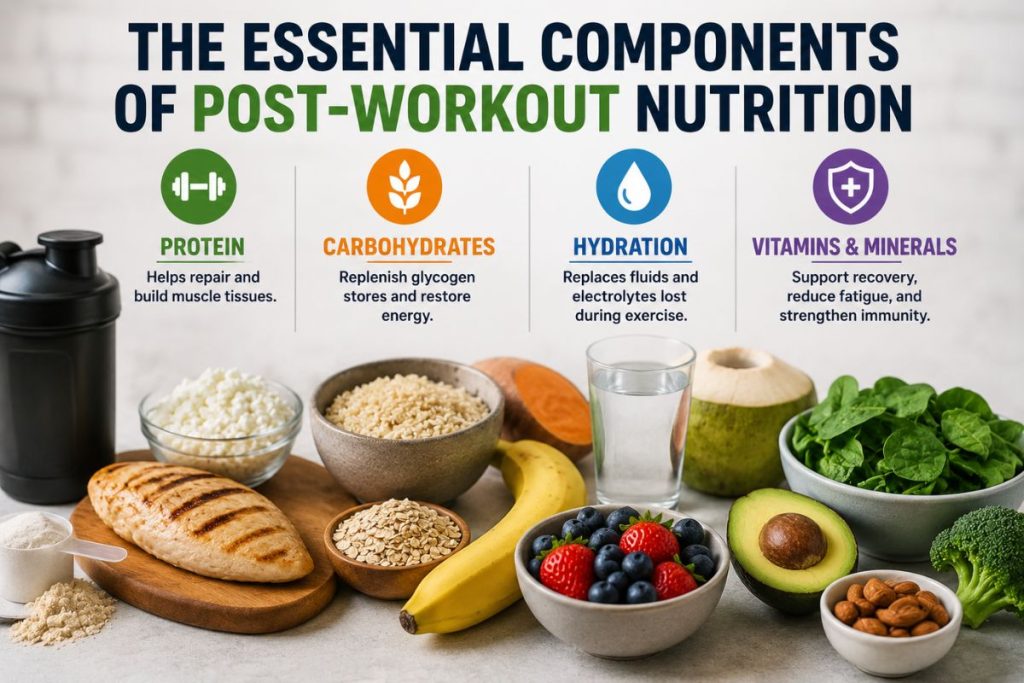
The Essential Components of Post-Workout Nutrition
1. Protein for Muscle Recovery
Protein is one of the most important nutrients after exercise. Physical activity, particularly strength training, creates microscopic damage to muscle fibers. Protein provides amino acids that the body uses to repair and rebuild these tissues.
Good post-workout protein sources include:
- Chicken breast
- Turkey
- Eggs
- Greek yogurt
- Cottage cheese
- Fish
- Tofu
- Tempeh
- Protein shakes
- Plant-based protein powders
Many fitness professionals recommend including approximately 20 to 40 grams of protein after exercise, although individual needs vary based on body size, activity level, and fitness goals.
2. Carbohydrates to Replenish Energy
Carbohydrates are often misunderstood, but they play a critical role in post-workout recovery. During exercise, especially moderate-to-high-intensity activities, the body uses glycogen stored in muscles and the liver for fuel.
Consuming carbohydrates after exercise helps restore these energy reserves.
Healthy carbohydrate sources include:
- Oatmeal
- Brown rice
- Sweet potatoes
- Whole-grain bread
- Quinoa
- Fruits such as bananas and berries
- Whole-grain pasta
Combining carbohydrates with protein may provide additional recovery benefits and support glycogen restoration.
3. Hydration and Electrolytes
Sweating causes the body to lose water and electrolytes. Rehydration is a vital part of post-workout nutrition and should not be ignored.
Water is often sufficient for moderate workouts. However, longer or more intense sessions may require additional electrolyte replacement.
Important electrolytes include:
- Sodium
- Potassium
- Magnesium
- Calcium
Foods such as bananas, leafy greens, dairy products, and electrolyte beverages may help replace these nutrients.
Best Foods to Eat After a Workout
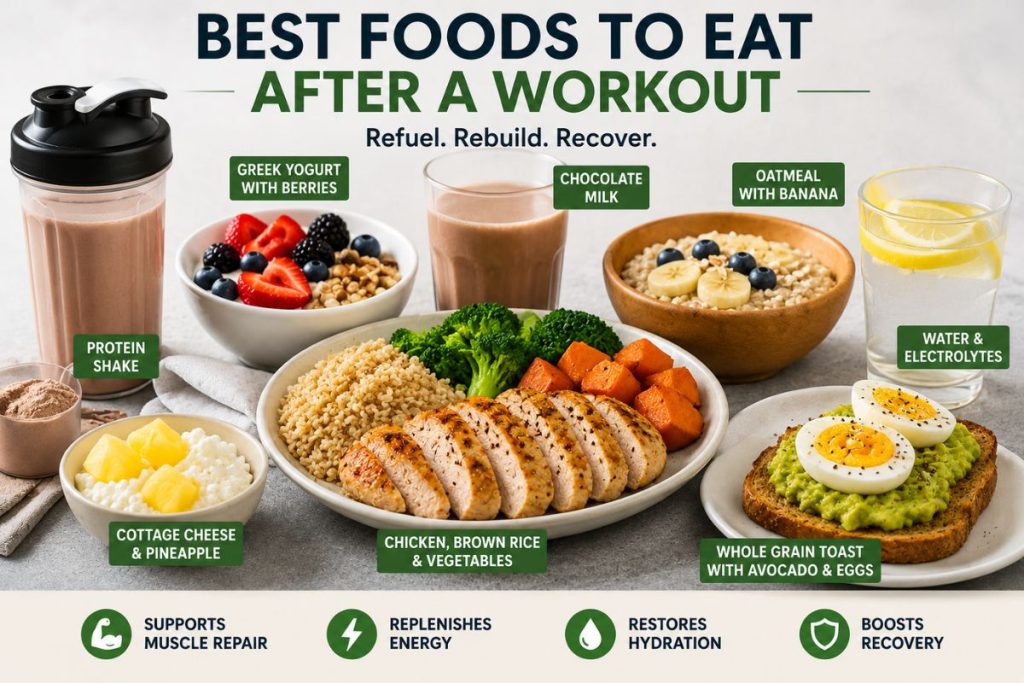
Choosing nutrient-dense foods can make recovery easier and more effective.
Some excellent post-workout meal ideas include:
1. Grilled Chicken with Brown Rice
This meal provides lean protein and complex carbohydrates to support recovery and energy replenishment.
2. Greek Yogurt with Berries
Greek yogurt offers protein, while berries provide antioxidants and natural carbohydrates.
3. Protein Smoothie
A smoothie containing protein powder, banana, milk, and spinach can be a convenient recovery option.
4. Eggs and Whole-Grain Toast
Eggs deliver high-quality protein, and whole-grain toast supplies carbohydrates for glycogen restoration.
5. Salmon with Sweet Potato
Salmon contains protein and beneficial omega-3 fatty acids, while sweet potatoes provide complex carbohydrates.
When Should You Eat After Exercise?
One common question is whether there is a specific “anabolic window” after exercise.
Current research suggests that total daily nutrient intake is generally more important than consuming food immediately after a workout. However, eating a balanced meal within a few hours after exercise may support recovery and muscle protein synthesis.
Individuals who train intensely, perform multiple workouts per day, or exercise while fasting may benefit from prioritizing post-workout nutrition sooner.
Nutrients That Support Recovery
Beyond protein and carbohydrates, several nutrients may contribute to recovery and overall wellness.
1. Omega-3 Fatty Acids
Found in fatty fish, walnuts, and flaxseeds, omega-3s may help support a healthy inflammatory response after exercise.
2. Magnesium
Magnesium supports muscle function and energy production. Foods such as spinach, almonds, and pumpkin seeds are rich sources.
3. Antioxidants
Colorful fruits and vegetables provide antioxidants that help protect cells from oxidative stress generated during exercise.
Examples include:
- Blueberries
- Strawberries
- Oranges
- Kale
- Bell peppers
Common Post-Workout Nutrition Mistakes
Many people unintentionally slow their recovery by making a few common mistakes.
1. Skipping Meals After Exercise
Ignoring hunger after a workout may make it harder to replenish nutrients and recover effectively.
2. Not Drinking Enough Water
Even mild dehydration can affect recovery and physical performance.
3. Focusing Only on Protein
While protein is important, carbohydrates also play a major role in restoring energy stores.
4. Choosing Highly Processed Foods
Fast food and heavily processed snacks may lack the nutrients needed for optimal recovery.
Indo Health is dedicated to helping you discover the best and most trusted dietary supplements available in the United States.
Practical Tips for Better Recovery
To make post-workout nutrition part of your routine:
- Plan meals ahead of time.
- Keep healthy snacks available.
- Carry a water bottle throughout the day.
- Include protein with every meal.
- Prioritize whole foods whenever possible.
- Adjust portion sizes based on activity level and fitness goals.
Consistency often matters more than perfection. Small improvements in recovery habits can support long-term fitness and wellness success.
Final Thoughts
Post-workout nutrition is an essential part of any fitness routine. The right combination of protein, carbohydrates, hydration, and nutrient-rich foods can help support muscle recovery, replenish energy stores, and prepare the body for future activity.
Rather than focusing on complicated nutrition strategies, aim to build balanced meals that include quality protein, healthy carbohydrates, and adequate fluids. Over time, these habits can contribute to improved recovery, better performance, and overall well-being.
Frequently Asked Questions
What is the best food to eat after a workout?
A combination of protein and carbohydrates is generally considered ideal. Examples include Greek yogurt with fruit, chicken with rice, or a protein smoothie.
Is it necessary to drink a protein shake after exercise?
Not necessarily. Whole-food protein sources can be equally effective. Protein shakes simply offer convenience.
How long should I wait to eat after a workout?
Most people can benefit from eating within a few hours after exercise, though exact timing depends on individual needs and workout intensity.
Can post-workout nutrition help muscle growth?
Adequate protein intake combined with resistance training may support muscle repair and growth over time.
Should I eat carbohydrates after a workout?
Yes. Carbohydrates help replenish glycogen stores used during exercise and support recovery.