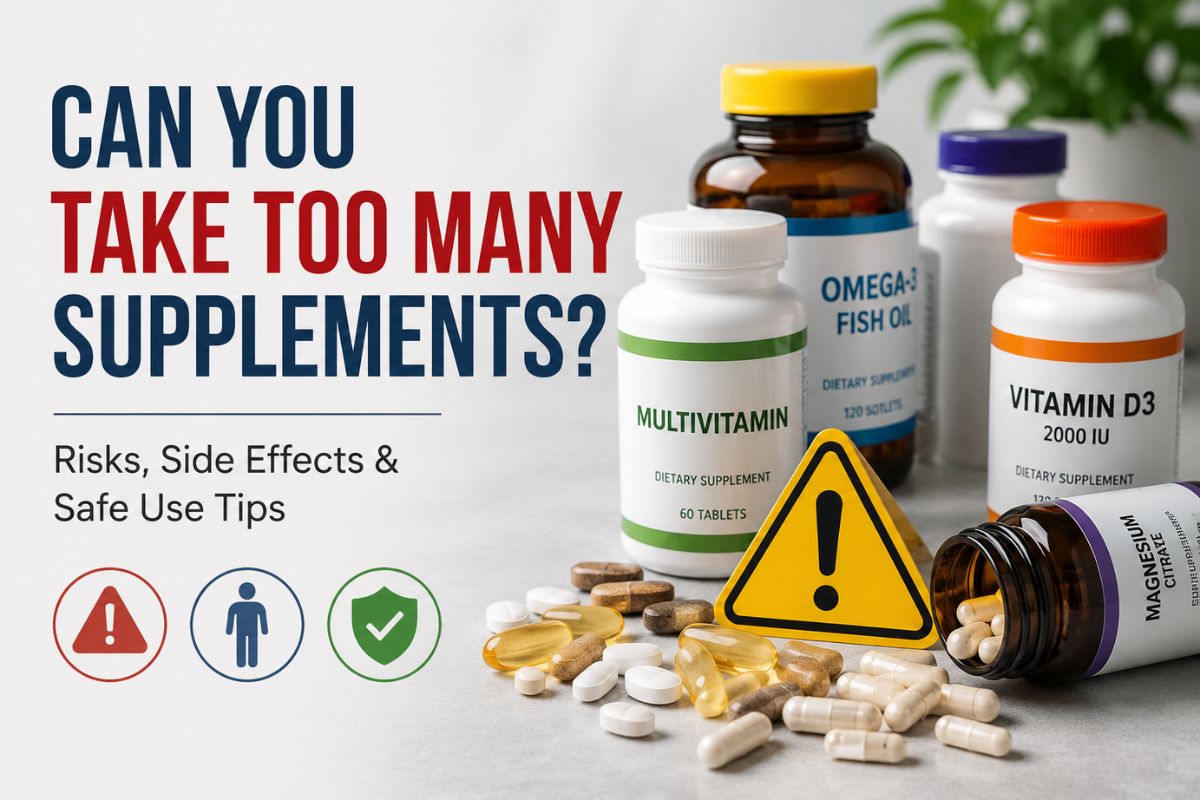
Can You Take Too Many Supplements?
Dietary supplements have become a regular part of many Americans’ daily routines. From multivitamins and probiotics to fish oil and herbal extracts, millions of people use supplements to support their health and wellness goals. While supplements can help fill nutritional gaps and provide certain health benefits, many people assume that if a little is good, more must be better. However, that isn’t always true.
So, can you take too many supplements? The short answer is yes. Taking excessive amounts of certain vitamins, minerals, or other dietary supplements can potentially cause unwanted side effects and, in some cases, serious health problems. Understanding the risks and using supplements responsibly is essential for maintaining your overall well-being.
Why People Take Multiple Supplements
Americans often take several supplements at the same time. A person may start with a daily multivitamin and then add vitamin D, magnesium, fish oil, probiotics, collagen, and other products based on health goals or recommendations from friends and social media.
While each supplement may seem harmless on its own, combining multiple products can sometimes lead to excessive nutrient intake. Many supplements contain overlapping ingredients, making it easier than people realize to exceed recommended daily amounts.
Understanding Recommended Daily Intake
Health experts establish Recommended Dietary Allowances (RDAs) and Tolerable Upper Intake Levels (ULs) for many vitamins and minerals. The RDA represents the amount most healthy individuals need each day, while the UL indicates the maximum daily intake unlikely to cause adverse effects.
Consistently exceeding the upper limit may increase the risk of side effects. This is particularly important for fat-soluble vitamins, which can accumulate in the body over time.
Vitamins That Can Be Harmful in Excess
Vitamin A
Vitamin A supports vision, immune function, and skin health. However, taking too much vitamin A over extended periods can lead to symptoms such as headaches, dizziness, nausea, liver problems, and even bone loss.
Vitamin D
Vitamin D is one of the most popular supplements in the United States, especially among individuals who receive limited sun exposure. While adequate vitamin D is important for bone health, excessive intake can cause high calcium levels in the blood, leading to nausea, kidney issues, and other complications.
Vitamin E
Vitamin E acts as an antioxidant, but high doses may increase the risk of bleeding, particularly in people taking blood-thinning medications.
Vitamin K
Although generally safe, vitamin K can interfere with certain medications, including anticoagulants. Individuals taking prescription medications should always consult a healthcare professional before supplementing.
Minerals Can Also Be Overconsumed
Many people focus on vitamins while overlooking minerals. Yet excessive mineral intake can also create health concerns.
Iron
Iron supplements are beneficial for individuals with diagnosed iron deficiency. However, taking iron unnecessarily can cause digestive issues and, in severe cases, toxicity.
Zinc
Zinc supports immune health and wound healing, but high doses over time may lead to nausea, stomach discomfort, and copper deficiency.
Calcium
Calcium is essential for strong bones, but excessive supplementation may contribute to kidney stones and other health concerns in some individuals.
Herbal Supplements Are Not Risk-Free
A common misconception is that natural products are automatically safe. In reality, herbal supplements can interact with medications and may cause side effects.
Popular herbal supplements such as ginseng, ginkgo biloba, turmeric extracts, and St. John’s wort may affect blood pressure, blood clotting, or the effectiveness of prescription medications. Because herbal products are widely available without a prescription, many consumers underestimate their potential impact.
Signs You May Be Taking Too Many Supplements
The symptoms of excessive supplement intake vary depending on the nutrient involved. Common warning signs may include:
- Persistent nausea
- Digestive discomfort
- Headaches
- Fatigue
- Dizziness
- Skin changes
- Sleep disturbances
- Unexplained muscle weakness
- Irregular heartbeat in severe cases
Because these symptoms can resemble other health conditions, it is often difficult to identify supplements as the cause without professional guidance.
How to Use Supplements Safely
The good news is that supplements can be used safely when taken appropriately. Consider the following tips:
Read Labels Carefully
Always review supplement labels and ingredient lists. Pay attention to serving sizes and nutrient amounts, especially if you take multiple products.
Avoid Duplicating Ingredients
Many multivitamins already contain vitamin D, zinc, magnesium, and other nutrients. Taking separate supplements containing the same ingredients can quickly increase your total intake.
Follow Recommended Dosages
More is not necessarily better. Follow dosage instructions provided on the product label unless directed otherwise by a healthcare professional.
Discuss Supplements With Your Healthcare Provider
Your doctor or registered dietitian can help determine which supplements are appropriate based on your age, health status, medications, and nutritional needs.
Prioritize a Healthy Diet
Supplements are intended to supplement—not replace—a balanced diet. Nutrient-rich foods remain the best source of vitamins, minerals, fiber, and other beneficial compounds.
The Bottom Line
Supplements can play a valuable role in supporting health, especially when dietary intake is insufficient or specific deficiencies exist. However, taking too many supplements can lead to excessive nutrient intake, unwanted side effects, and potential interactions with medications.
For most Americans, the safest approach is to focus on a balanced diet, choose supplements carefully, and avoid assuming that higher doses provide greater benefits. When used responsibly and under professional guidance, supplements can be an effective part of a healthy lifestyle.
Health Disclaimer
This article is for informational and educational purposes only and is not intended to provide medical advice, diagnosis, or treatment. Always consult a qualified healthcare professional before starting, stopping, or changing any dietary supplement regimen. Individual nutritional needs and health conditions vary, and what works for one person may not be appropriate for another. If you experience adverse reactions or have concerns about supplement use, seek medical attention promptly.