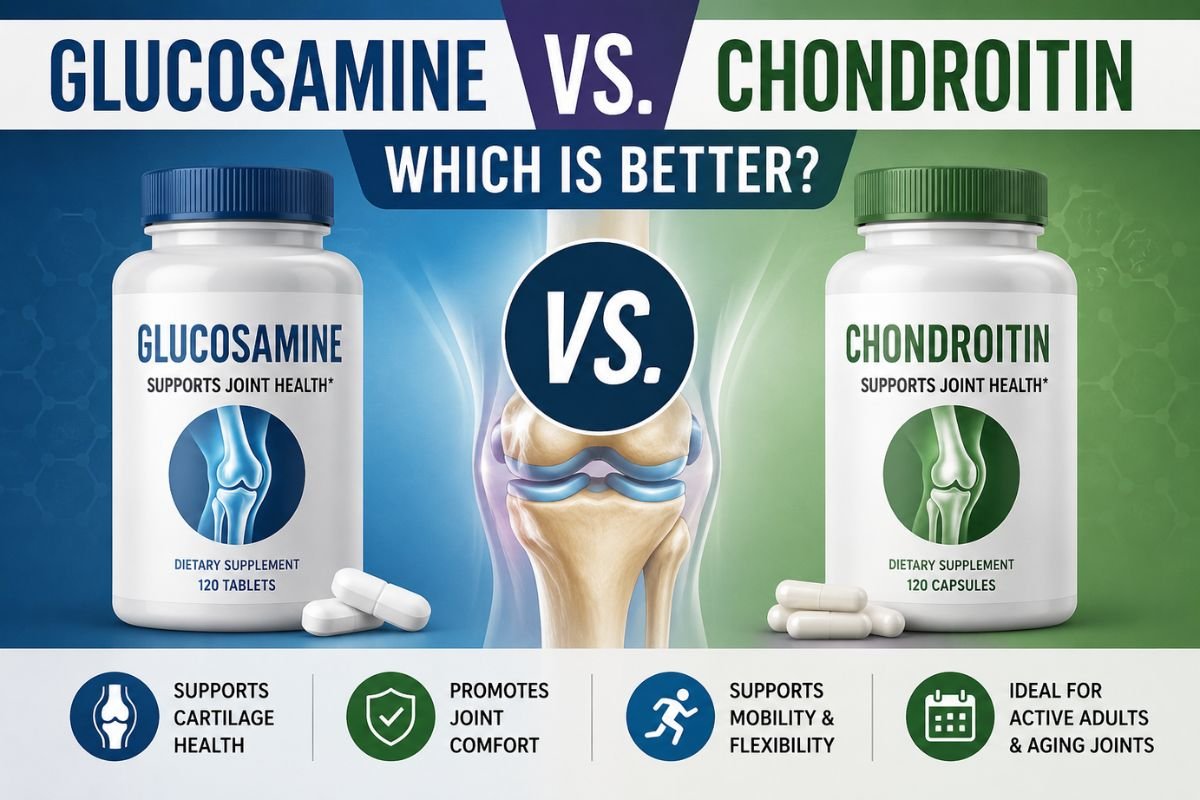
Glucosamine vs. Chondroitin: Which Is Better?
Joint health is a growing concern for millions of Americans, especially as they age. Whether it’s occasional knee discomfort, stiffness after exercise, or age-related joint issues, many people turn to dietary supplements for support. Among the most popular options are glucosamine and chondroitin.
These two supplements are often found together in joint health formulas, but many consumers wonder: Which is better—glucosamine or chondroitin? Understanding how they work, their potential benefits, and their differences can help you make a more informed decision.
What Is Glucosamine?
Glucosamine is a naturally occurring compound found in the body’s cartilage, the connective tissue that cushions joints. It plays an important role in maintaining the structure and function of cartilage.
Most glucosamine supplements are derived from shellfish shells, although vegetarian versions made through fermentation are also available. The most common forms include:
- Glucosamine sulfate
- Glucosamine hydrochloride
- N-acetyl glucosamine
Glucosamine sulfate is the form most frequently studied for joint health.
Potential Benefits of Glucosamine
Many Americans use glucosamine supplements to support joint comfort and mobility. Research suggests that glucosamine may help:
- Support healthy cartilage structure
- Promote joint flexibility
- Assist in maintaining joint function during aging
- Support active lifestyles and exercise recovery
Some studies have found that glucosamine sulfate may help slow the progression of certain joint changes associated with aging, although results can vary among individuals.
What Is Chondroitin?
Chondroitin is another naturally occurring substance found in cartilage. It helps cartilage retain water, which contributes to its cushioning and shock-absorbing properties.
Most chondroitin supplements are sourced from animal cartilage, such as bovine, porcine, or shark cartilage.
Potential Benefits of Chondroitin
Chondroitin is commonly used to support joint health because it may:
- Help maintain cartilage elasticity
- Support joint lubrication
- Promote healthy joint function
- Support mobility and flexibility
Many users report improvements in joint comfort after several weeks or months of consistent supplementation.
Glucosamine vs. Chondroitin: Key Differences
Although both supplements support joint health, they work in slightly different ways.
Glucosamine
- Helps build and maintain cartilage
- Supports cartilage production
- Often studied for long-term joint maintenance
- Available in multiple forms
Chondroitin
- Helps cartilage retain moisture
- Supports shock absorption within joints
- May help maintain cartilage elasticity
- Commonly paired with glucosamine
Think of glucosamine as helping support the building blocks of cartilage, while chondroitin helps keep cartilage hydrated and resilient.
Which Supplement Has More Research?
Both glucosamine and chondroitin have been extensively studied, particularly in relation to joint health and mobility.
Glucosamine has received significant attention in clinical research and is often recommended as one of the most popular joint support supplements in the United States.
Chondroitin has also demonstrated potential benefits, especially when combined with glucosamine. Some studies suggest that the combination may offer greater support than either ingredient alone.
However, scientific findings have been mixed. While many users report positive experiences, not all studies have shown the same level of benefit. Factors such as supplement quality, dosage, age, activity level, and overall health can influence results.
Can You Take Glucosamine and Chondroitin Together?
Yes. In fact, many joint health supplements combine both ingredients in a single formula.
The rationale behind combining them is simple:
- Glucosamine helps support cartilage structure.
- Chondroitin helps maintain cartilage hydration and flexibility.
Because they target different aspects of joint health, they are often viewed as complementary ingredients.
Many Americans choose combination supplements because they offer a convenient way to support overall joint wellness.
Who May Benefit From These Supplements?
Glucosamine and chondroitin are commonly used by:
- Adults over age 50
- Active individuals and athletes
- People seeking support for everyday joint comfort
- Those looking to maintain mobility as they age
- Individuals with physically demanding jobs
It’s important to remember that dietary supplements are intended to support overall health and should not be viewed as treatments or cures for medical conditions.
Are There Any Side Effects?
Both glucosamine and chondroitin are generally considered well tolerated when used as directed.
Some individuals may experience mild side effects, including:
- Upset stomach
- Nausea
- Bloating
- Digestive discomfort
People with shellfish allergies should carefully check glucosamine product labels, as some forms are derived from shellfish sources.
As with any supplement, individuals taking medications or managing health conditions should consult a healthcare professional before starting a new supplement regimen.
So, Which Is Better?
The answer depends on your goals.
If you’re looking for support for cartilage maintenance and joint structure, glucosamine may be a strong option.
If your focus is on cartilage hydration, flexibility, and cushioning, chondroitin may offer unique advantages.
For many Americans, the best approach may be a combination of both ingredients. Since glucosamine and chondroitin support joint health in different ways, using them together may provide broader support than taking either supplement alone.
Final Thoughts
Glucosamine and chondroitin remain two of the most popular joint health supplements in the United States. Both play important roles in supporting healthy cartilage, mobility, and overall joint function.
While neither supplement works overnight, many users find that consistent use over time helps support an active lifestyle and healthy aging. Whether you choose glucosamine, chondroitin, or a combination formula, selecting a high-quality supplement and maintaining realistic expectations can help you get the most from your joint health routine.