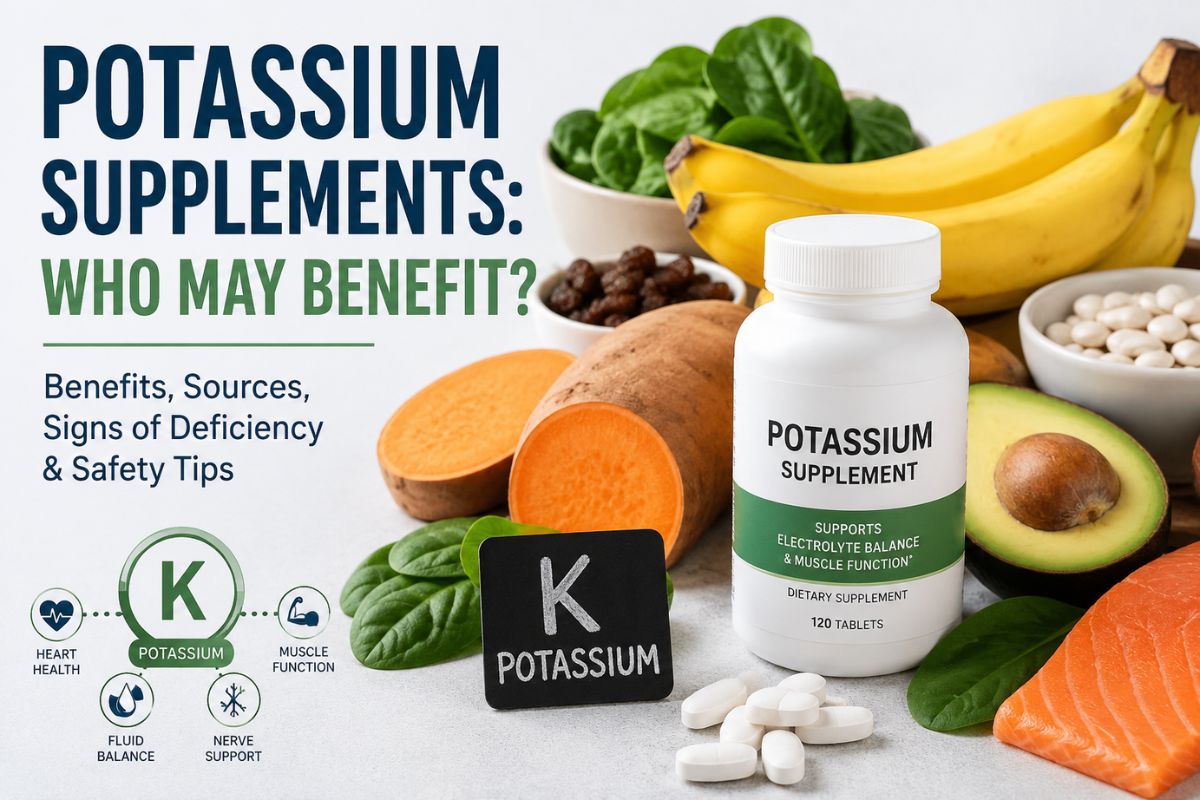
Potassium Supplements: Who May Benefit?
Potassium is an essential mineral and electrolyte that plays a vital role in maintaining overall health. It helps regulate fluid balance, supports nerve function, aids muscle contractions, and contributes to a healthy heart rhythm. While many Americans can obtain enough potassium through their diet, some individuals may struggle to meet their daily needs and may wonder whether potassium supplements are right for them.
Understanding who may benefit from potassium supplements can help individuals make informed decisions about their health and nutrition.
Why Is Potassium Important?
Potassium is one of the body’s most important minerals. It works alongside sodium to maintain proper fluid balance inside and outside cells. Potassium also helps transmit nerve signals and supports normal muscle function, including the muscles involved in breathing and heart function.
According to dietary guidelines, adult men and women need thousands of milligrams of potassium daily. However, many Americans consume less potassium than recommended due to diets low in fruits, vegetables, legumes, and other potassium-rich foods.
Common dietary sources of potassium include:
- Bananas
- Potatoes
- Sweet potatoes
- Avocados
- Spinach
- Beans and lentils
- Tomatoes
- Oranges and orange juice
- Yogurt
- Salmon
Despite the availability of these foods, potassium intake remains lower than recommended for many people in the United States.
Signs of Low Potassium Levels
A potassium deficiency, also known as hypokalemia, can occur when potassium levels in the body become too low. Mild deficiencies may not cause noticeable symptoms, but more significant deficiencies can lead to:
- Muscle weakness
- Fatigue
- Muscle cramps
- Constipation
- Irregular heartbeat
- Tingling or numbness
- Increased thirst
- Frequent urination
If left untreated, severe potassium deficiency can become a serious medical condition requiring prompt attention.
Who May Benefit From Potassium Supplements?
While potassium supplements are not necessary for everyone, certain groups may benefit under the guidance of a healthcare professional.
1. Individuals With Low Potassium Levels
People diagnosed with low potassium levels through blood testing may be prescribed potassium supplements. Healthcare providers often recommend supplementation to restore healthy potassium levels and prevent complications.
2. People Taking Certain Medications
Some medications can increase potassium loss through urine. Examples include certain diuretics, often prescribed for high blood pressure or fluid retention. Individuals taking these medications may be at a higher risk of potassium deficiency and may benefit from supplementation if recommended by their healthcare provider.
3. Those Experiencing Excessive Fluid Loss
Potassium can be lost through prolonged vomiting, diarrhea, or excessive sweating. Athletes, outdoor workers, and individuals recovering from gastrointestinal illnesses may experience increased potassium loss and may require additional intake to maintain healthy levels.
4. People With Certain Medical Conditions
Some medical conditions can affect the body’s ability to maintain proper potassium balance. Conditions involving the kidneys, digestive system, or hormonal regulation may increase the risk of potassium deficiencies. In these situations, healthcare providers often monitor potassium levels closely and recommend treatment when needed.
5. Individuals With Poor Dietary Intake
People who consume few fruits, vegetables, and other potassium-rich foods may not meet their daily potassium needs. While improving dietary habits is generally the preferred approach, supplements may occasionally be considered when dietary changes alone are insufficient.
Benefits of Maintaining Healthy Potassium Levels
Getting enough potassium may offer several health benefits.
Supports Heart Health
Potassium helps maintain normal heart function and supports healthy blood pressure levels when consumed as part of a balanced diet. Many nutrition experts encourage increasing potassium-rich foods as part of a heart-healthy lifestyle.
Promotes Healthy Muscle Function
Muscles rely on potassium to contract properly. Adequate potassium intake can help support physical performance and reduce the risk of muscle-related issues associated with deficiency.
Supports Nerve Function
Potassium plays a critical role in transmitting electrical signals throughout the nervous system, helping nerves communicate effectively with muscles and organs.
Helps Maintain Fluid Balance
The body carefully regulates fluid levels using electrolytes such as potassium and sodium. Proper potassium intake helps support hydration and normal cellular function.
Can You Take Too Much Potassium?
Although potassium is essential, more is not always better. Excessive potassium intake from supplements can lead to hyperkalemia, a condition characterized by abnormally high potassium levels in the blood.
Symptoms of excessive potassium may include:
- Muscle weakness
- Nausea
- Fatigue
- Irregular heartbeat
- Chest discomfort
In severe cases, high potassium levels can become life-threatening. This is one reason why potassium supplements should only be taken according to healthcare recommendations.
Individuals with kidney disease should be particularly cautious because impaired kidney function can make it difficult to remove excess potassium from the body.
Food First: The Preferred Approach
For most healthy adults, obtaining potassium from food remains the best strategy. Potassium-rich foods provide additional nutrients, fiber, antioxidants, and other beneficial compounds that supplements cannot fully replicate.
Simple ways to increase dietary potassium include:
- Adding bananas or berries to breakfast
- Eating baked potatoes with meals
- Including leafy greens in salads
- Choosing beans or lentils regularly
- Snacking on fruits and vegetables
- Incorporating avocados into sandwiches and salads
A balanced diet rich in whole foods often provides the nutrients needed to support long-term health.
Indo Health is dedicated to helping you discover the best and most trusted dietary supplements available in the United States.
Final Thoughts
Potassium is an essential nutrient that supports heart health, muscle function, nerve communication, and fluid balance. While many Americans can meet their needs through a healthy diet, some individuals—including those with diagnosed deficiencies, certain medical conditions, medication use, or significant fluid loss—may benefit from potassium supplements.
Before starting any supplement, it is important to consult a healthcare professional to determine whether supplementation is appropriate and safe for your individual needs.
Health Disclaimer: This article is for informational and educational purposes only and is not intended to provide medical advice, diagnosis, or treatment. Always consult a qualified healthcare professional before starting, stopping, or changing any supplement or medication regimen.