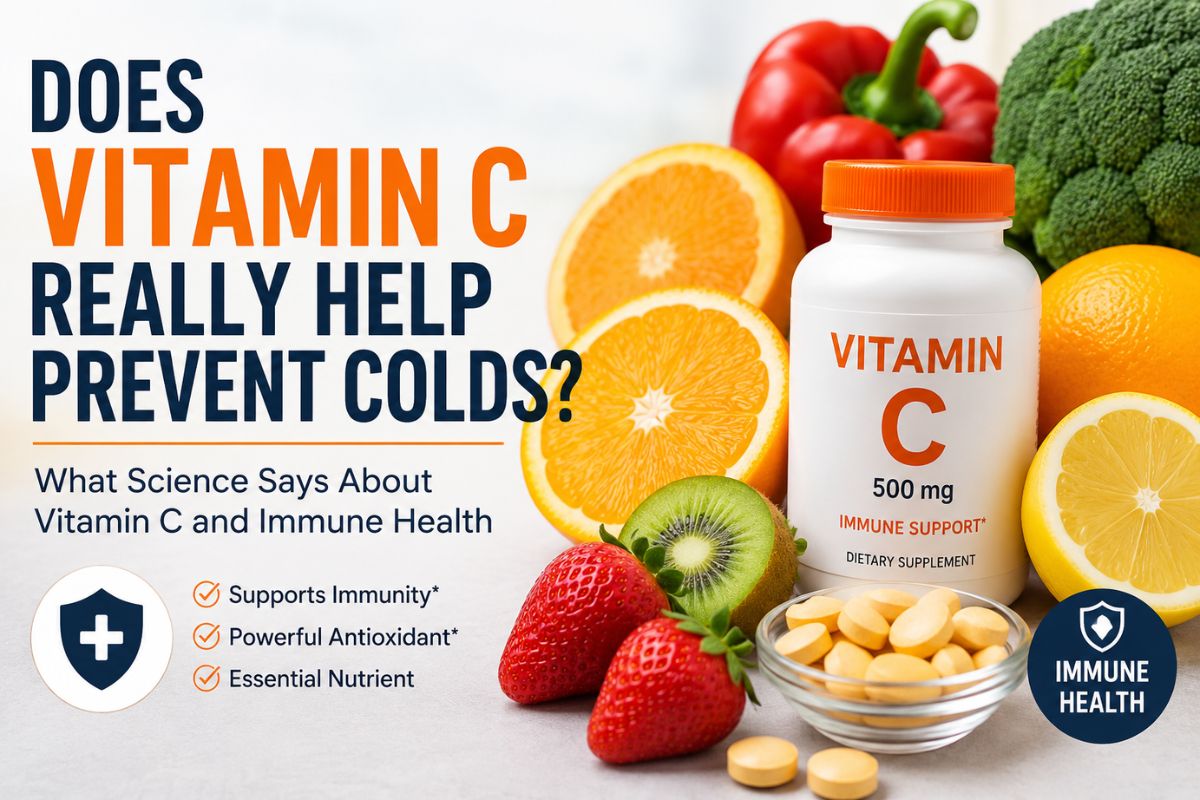
Does Vitamin C Really Help Prevent Colds?
Every year, millions of Americans catch the common cold, especially during the fall and winter months. With symptoms like a runny nose, sore throat, coughing, and congestion, it’s no surprise that people are constantly looking for ways to avoid getting sick. One of the most popular remedies associated with cold prevention is vitamin C. From supplements and chewable tablets to fortified drinks and powders, vitamin C products are widely marketed as immune-supporting solutions.
But does vitamin C really help prevent colds, or is it simply one of the most enduring health myths? Let’s take a closer look at what science says.
What Is Vitamin C?
Vitamin C, also known as ascorbic acid, is a water-soluble vitamin that plays several important roles in the body. It helps support the immune system, aids in collagen production, assists with wound healing, and acts as an antioxidant that helps protect cells from damage caused by free radicals.
Unlike many animals, humans cannot produce vitamin C naturally, which means it must be obtained through food or supplements. Common dietary sources include oranges, strawberries, kiwi, bell peppers, broccoli, tomatoes, and leafy green vegetables.
Why Is Vitamin C Linked to Cold Prevention?
The connection between vitamin C and the common cold became popular in the 1970s when Nobel Prize-winning scientist Linus Pauling promoted the idea that high doses of vitamin C could prevent or reduce colds. His claims generated widespread public interest, and vitamin C quickly became a staple in many households during cold and flu season.
Decades later, researchers have conducted numerous studies to determine whether vitamin C can truly prevent colds.
Can Vitamin C Prevent the Common Cold?
For most healthy adults, taking vitamin C supplements regularly does not appear to significantly reduce the risk of catching a cold.
Research has consistently shown that people who take vitamin C daily are generally just as likely to develop a cold as those who do not take supplements. In other words, vitamin C is not a guaranteed shield against common cold viruses.
However, there are a few exceptions. Certain groups exposed to intense physical stress, such as marathon runners, military personnel, and people training in extremely cold environments, may experience a reduced risk of developing colds when taking vitamin C supplements regularly.
For the average American adult with a normal lifestyle, though, vitamin C is unlikely to prevent colds entirely.
Can Vitamin C Reduce Cold Symptoms?
While vitamin C may not stop you from catching a cold, it may offer some benefits once you’re sick.
Studies suggest that people who take vitamin C supplements consistently before getting sick may experience slightly shorter cold durations. Some research indicates that regular supplementation can reduce the length of a cold by about 8% in adults and up to 14% in children.
This means that if a cold normally lasts ten days, vitamin C might shorten it by less than a day for many people.
Additionally, some individuals report experiencing milder symptoms, such as reduced congestion or a shorter period of discomfort. However, the benefits tend to be modest rather than dramatic.
Does Taking Vitamin C After Symptoms Start Help?
Many Americans reach for vitamin C supplements as soon as they feel a sore throat or sniffle coming on. Unfortunately, the evidence for this approach is less convincing.
Most studies have found that starting vitamin C supplementation after cold symptoms appear provides little to no significant benefit. While some people may feel that vitamin C helps them recover faster, research has not consistently shown strong improvements when supplementation begins after illness starts.
For the best chance of seeing any benefit, vitamin C would generally need to be taken regularly rather than only when symptoms appear.
How Much Vitamin C Do Adults Need?
According to U.S. dietary recommendations, the recommended daily amount of vitamin C is:
- 90 milligrams per day for adult men
- 75 milligrams per day for adult women
- Higher amounts may be recommended during pregnancy and breastfeeding
Most Americans can meet these requirements through a balanced diet rich in fruits and vegetables.
For example, one medium orange contains around 70 milligrams of vitamin C, while a serving of red bell pepper can provide even more.
Are High-Dose Vitamin C Supplements Safe?
Vitamin C is generally considered safe when consumed within recommended limits. Because it is water-soluble, excess amounts are typically excreted through urine rather than stored in the body.
However, very high doses may cause side effects, including:
- Stomach cramps
- Nausea
- Diarrhea
- Digestive discomfort
In some individuals, excessive vitamin C intake may increase the risk of kidney stones. The tolerable upper intake level for adults is generally considered to be 2,000 milligrams per day.
Before taking high-dose supplements regularly, it’s a good idea to consult a healthcare professional.
Other Ways to Reduce Your Risk of Colds
While vitamin C can play a role in supporting overall immune health, it should not be viewed as the primary defense against colds.
Other evidence-based strategies include:
- Washing hands frequently
- Getting adequate sleep
- Managing stress levels
- Staying physically active
- Eating a balanced diet
- Staying hydrated
- Avoiding close contact with sick individuals when possible
These habits have a stronger impact on overall health and immune function than relying on a single supplement.
Indo Health is dedicated to helping you discover the best and most trusted dietary supplements available in the United States.
The Bottom Line
Vitamin C remains one of the most popular supplements in the United States, and it does contribute to a healthy immune system. However, scientific evidence suggests that vitamin C is unlikely to prevent the common cold in most people.
Regular vitamin C supplementation may slightly shorten the duration of a cold and potentially reduce symptom severity, but the effects are generally modest. For most Americans, maintaining a nutrient-rich diet and practicing healthy lifestyle habits are more effective strategies for supporting immune health year-round.
Health Disclaimer
This article is for informational and educational purposes only and should not be considered medical advice. Always consult a qualified healthcare professional before starting any new supplement, making significant dietary changes, or addressing specific health concerns. Individual health needs and responses to supplements may vary.